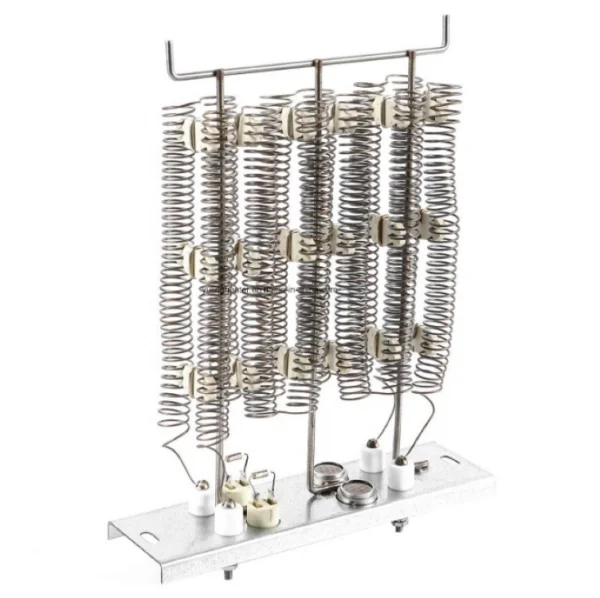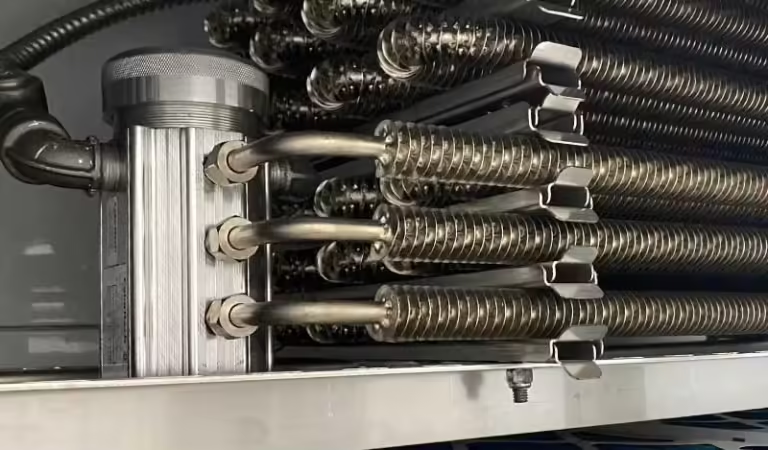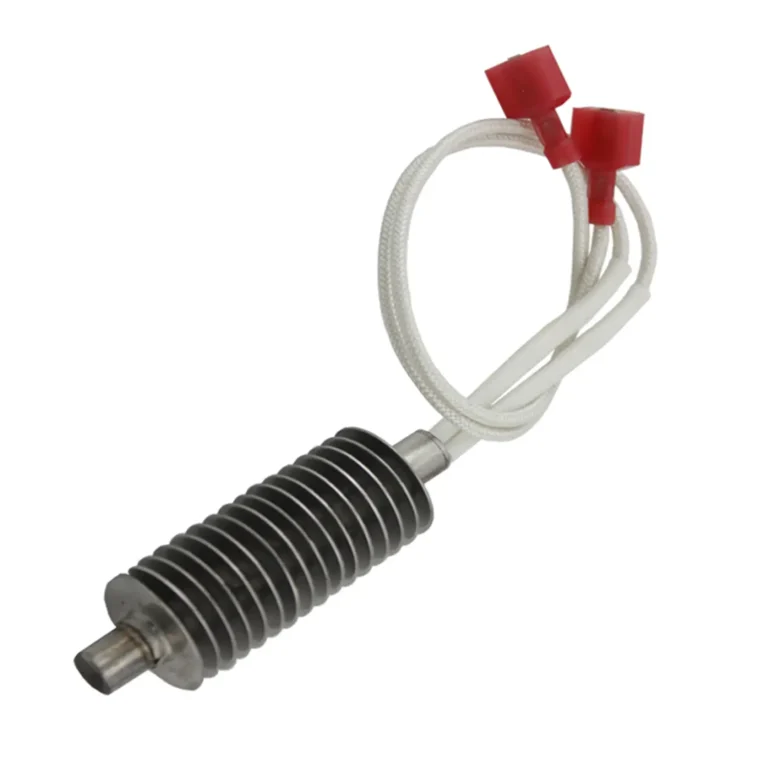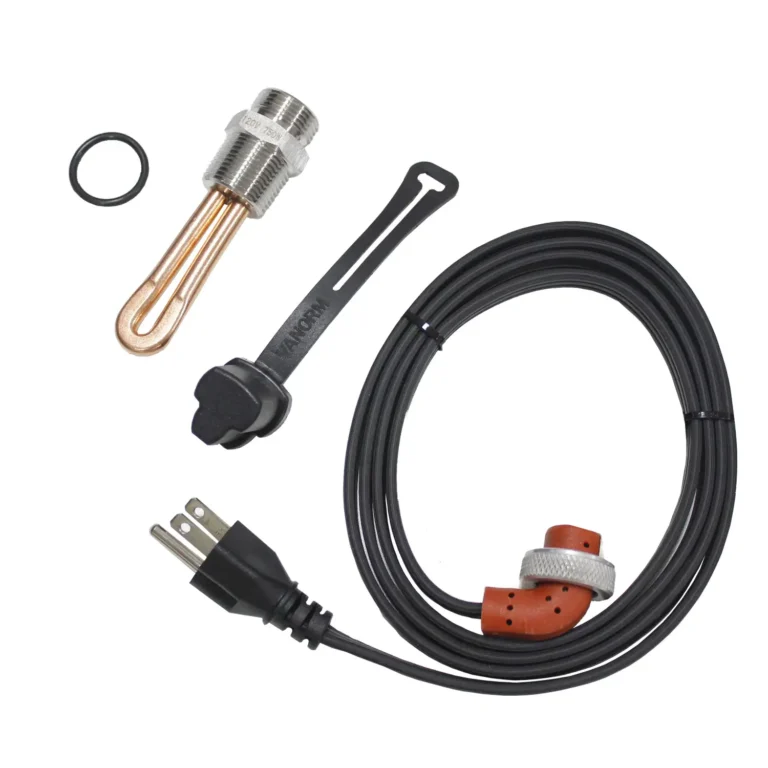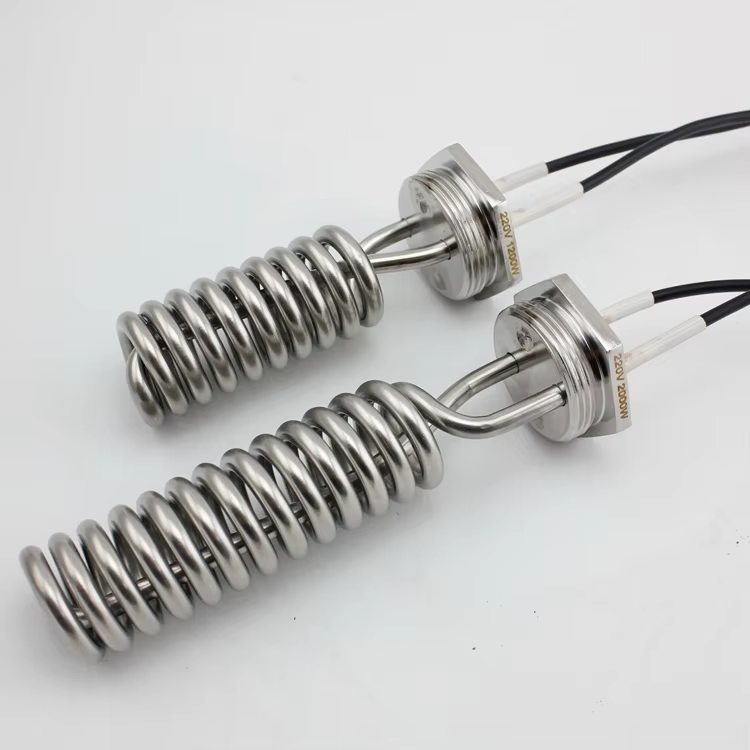
当工业烤箱制造商需要 4.8 kW U-bend tubular heater with a custom flange pitch that no catalog matches, or a packaging equipment builder requires a silicone rubber heating pad shaped to a curved mold cavity, they face the same problem: standard heating elements do not fit. This is where custom heating elements become the only viable path.
In our 40-plus years of manufacturing practice at Vanorm, we have seen the same costly mistakes repeat across OEM procurement teams — vague specifications that lead to unusable prototypes, suppliers who accept custom orders but lack the engineering depth to execute them, and buyers who discover too late that certification requirements were overlooked. This article walks through five proven mistakes OEM buyers make and how to avoid them before they hit your production line.

Mistake #1: Assuming Every Heating Element Supplier Can Handle Custom Orders
The most expensive assumption in OEM procurement is that any supplier listing “custom heating elements” on their website can actually deliver them. In reality, many factories are set up for volume production of a narrow range of standard wattages, diameters, and sheath materials. Ask them to produce a non-standard bend geometry in Incoloy 800 with a built-in Type K thermocouple, and the conversation ends.
What separates a true custom manufacturer from a standard-line reseller comes down to three capabilities: in-house engineering support, material sourcing flexibility, and a willingness to handle small-batch prototyping.
At our 8,000 m² facility, every custom inquiry goes through a structured engineering review — our technical team evaluates the drawing or sample against material availability, forming feasibility, and thermal performance before we quote. This step alone can catch design issues that would otherwise surface as field failures months later.
When vetting a supplier for custom made heating elements, ask directly: do you have an internal tooling workshop for custom bend jigs and fixture fabrication? Can you source non-standard sheath alloys such as Incoloy 825 or 316L stainless in small quantities? Do you provide a thermal simulation or watt-density recommendation as part of the quotation? If the answer to any of these is “we will check with our subcontractor,” you are likely talking to a trading company, not a manufacturer.
Mistake #2: Submitting Vague Specifications — or None at All
We receive RFQs every week that read something like “need a heater for a tank, 220V, 关于 3 kW.” That is not a specification; it is a starting point for a very long email thread. Without defined parameters, the supplier is forced to guess — and a guessed custom heating element is almost guaranteed to fail in the application.
A complete custom heating element specification should cover at minimum:
- 功率和电压: Specify both rated power (瓦) and operating voltage (V). A 3 KW / 230V element behaves very differently from a 3 KW / 480V element in terms of current draw and insulation requirements.
- Watt density: Expressed in W/cm² or W/in² of sheath surface area. This single parameter determines element life, sheath temperature, and whether the heater will survive in the medium it is heating. For immersion in still water, 6–8 W/cm² is typical; for forced air, 2–4 W/cm²; for oil or viscous fluids, lower densities prevent coking and carbon buildup.
- 护套材质: 304 stainless is standard, but acidic or high-chloride environments demand 316L or Incoloy. For temperatures above 800 °C in air, FeCrAl or NiCr 80/20 resistance wire with a ceramic or quartz sheath may be required.
- Geometry and terminal type: Overall length, heated length, cold zone, bend radius, terminal style (threaded stud, lead wire, quick-connect), and any mounting hardware (flange, threaded bushing, NPT fitting).
- Operating environment: Medium being heated, expected temperature range, exposure to vibration, 压力, or chemical splash.
When we work with new OEM clients, we provide a standardized spec sheet that walks them through each of these parameters. It often surfaces design gaps the buyer had not considered — such as whether the cold zone length allows enough clearance from a tank wall or whether the selected watt density will cause localized boiling in a viscous fluid. That engineering conversation is part of the value of working with an experienced custom heater manufacturer, not just a commodity supplier. For OEMs sourcing custom heating elements for the first time, having a supplier who provides this level of engineering review can cut prototype iterations from months to weeks.
Mistake #3: Overlooking Certification and Compliance Until the Shipment Arrives
A custom heating element that performs perfectly in testing can still be rejected at customs or fail a plant safety audit if it lacks the required certifications. North American equipment often requires UL or CSA recognition on the heating component itself — not just on the final assembly. European machinery under the Low Voltage Directive may need CE marking with a harmonized standard reference. Food-contact applications add further requirements around material traceability and FDA or EU 1935/2004 compliance for any wetted surfaces.
We maintain a certification portfolio that includes CE, UL, 有害物质限制指令, CQC, and ISO quality management system registration. 更重要的是, our independent in-house testing laboratory validates every batch against the relevant standard before shipment.
For a recent project supplying custom heating elements to a European coffee machine OEM, we provided full material certificates for the 304 stainless sheath, the MgO insulation, and the NiCr resistance wire — three layers of traceability that the client’s compliance team had not received from their previous Asian supplier.
Mistake #4: Assuming MOQ Flexibility Without Confirming Prototyping Terms
Many OEM buyers design a custom heating solution, request quotes from three suppliers, and select the lowest unit price — only to discover that the winning supplier requires a minimum order of 2,000 units. When your initial need is 50 prototype samples for design validation, that MOQ gap kills the project.
We structure our custom projects in two phases: a prototyping run (as few as 10–50 units) followed by volume production once the design is validated. The prototyping phase includes full dimensional inspection and electrical testing on every unit, plus a thermal performance report. This two-phase approach means OEMs are not committing to volume pricing before confirming that the design works in their application.
It also gives our engineering team the chance to refine the manufacturing process — adjusting bend jigs, welding parameters, and MgO compaction density — before scaling to thousands of units per month. This phased approach is especially critical for custom heating elements with tight tolerances, where even a 0.5 mm deviation in bend radius can affect fitment in the final assembly.
Mistake #5: Evaluating Suppliers on Price Alone Instead of Engineering Partnership
The unit price of a custom heating element is easy to compare across suppliers. What is harder to quantify — but far more expensive to get wrong — is the cost of engineering support, design iteration speed, quality consistency, and on-time delivery. A supplier who quotes 15% lower but requires three rounds of back-and-forth to correct a drawing misinterpretation has already burned through your cost savings in engineering time and delayed your product launch.
In our manufacturing practice, we have built a team of engineers who speak the language of OEM product development — not just production metrics. Our laboratory runs thermal imaging on prototype elements, measures cold resistance and hot resistance to verify TCR curves, and checks insulation resistance at operating temperature using a 500V DC megohmmeter. This data package is provided with every prototype shipment, so the OEM’s design team has verifiable performance benchmarks, not just a physical sample.
With over 60 utility model patents and a client base spanning 100-plus global OEMs across industrial oven, packaging machinery, food equipment, and chemical processing sectors, our ability to solve novel heating challenges is not theoretical — it is documented in the products we ship every month.
When an OEM comes to us with a custom heating element request that others have declined — whether due to unusual geometry, exotic materials, or tight tolerances — that is exactly the kind of project our engineering team is built for.
Supplier Audit Checklist: 5 Documents to Request Before Signing a Purchase Order
Before committing to any custom heating element supplier, request these five documents.
A manufacturer that cannot produce them promptly is not equipped for OEM-level quality requirements.
- Material Test Certificates (Mill Test Reports) — For the sheath alloy, 电阻丝, and MgO insulation. Verify that the chemistry and mechanical properties match what was quoted. A supplier that cannot trace materials to the heat number cannot guarantee consistency across production batches.
- Insulation Resistance Test Report — Measured at operating temperature (not just cold). A cold IR reading of >100 MΩ is easy to achieve; a hot IR reading at 500 °C sustained for 10 minutes is what separates quality elements from premature failures. Request the test voltage (typically 500V DC) and duration.
- Dimensional Inspection Report (First Article) — For every custom geometry, the supplier should provide a dimensional report with measured vs. specified values for overall length, heated length, cold zone, bend radius, and terminal position. Tolerances of ±0.5 mm on critical dimensions are achievable with proper fixturing.
- Certification Documentation — Active CE Declaration of Conformity, UL file number (if applicable), RoHS compliance certificate, and ISO 9001 registration. Do not accept “we are applying for certification” — verify the documents are current and cover the specific product category.
- Pre-Production Sample Approval Record — Before volume production begins, the supplier should have a documented sign-off process on a pre-production sample. This record should include photos, test data, and written confirmation that the sample meets all specifications.
Refer to the testing guidelines published by ASTM International for standard test methods applicable to industrial heating elements, including dielectric strength and thermal endurance.
Frequently Asked Questions About Custom Heating Elements
After delivering thousands of custom heating elements to OEM clients worldwide, we have compiled answers to the questions our engineering team hears most often during the quotation and prototyping phases.
How long does it take to receive a custom heating element prototype?
Typical lead time for a prototype run of 10–50 units is 10–15 working days from drawing approval, depending on material availability and tooling complexity. Rush prototyping can be accommodated for urgent projects. Volume production lead times are confirmed after the prototype phase, once tooling and process parameters are finalized.
Can you manufacture heating elements from my existing sample or drawing?
是的. We reverse-engineer from physical samples or work directly from CAD drawings (STEP, DXF, PDF) to produce an engineering review and quotation. For samples, we perform dimensional analysis, material identification via XRF, and electrical characterization before quoting.
What certifications do your custom heating elements carry?
Our elements are manufactured under an ISO-registered quality management system and can be supplied with CE, UL, 有害物质限制指令, and CQC compliance as required. Certification scope depends on the specific element type and target market. We provide full documentation packages with every shipment.
Avoid the Custom Heating Element Procurement Trap
Sourcing custom heating elements is fundamentally different from buying catalog components. The supplier is not just a vendor — they are an extension of your engineering team. Choosing the wrong partner costs more in rework, delayed launches, and field failures than any unit-price savings can recover. The five mistakes outlined above are all avoidable with the right qualification process and a supplier that treats your custom project as an engineering challenge, not a line item.
If you are planning a new OEM product or upgrading an existing heating system and need a custom heating element that standard catalogs cannot provide, our engineering team is available to review your specifications and provide a feasibility assessment and quotation — typically within 48 hours of receiving a complete spec sheet or drawing.
For further reading, see our guides on selecting an industrial heating element manufacturer, immersion versus tubular heater selection, 和 preventing cartridge heater failure.