在重工业加工中, 大宗化学品储存, 沥青处理, 和发电, heating thousands of gallons of fluid safely requires immense electrical power concentrated within pressure-retaining vessel nozzles. 风俗 flange immersion heaters serve as the primary thermal engine for these critical systems. Specifying these assemblies requires rigorous engineering alignment between flange pressure classes, sheath metallurgy, fluid velocity, and over-temperature safety controls.
内容

What Makes Flange Immersion Heaters the Backbone of Heavy Industrial Tanks?
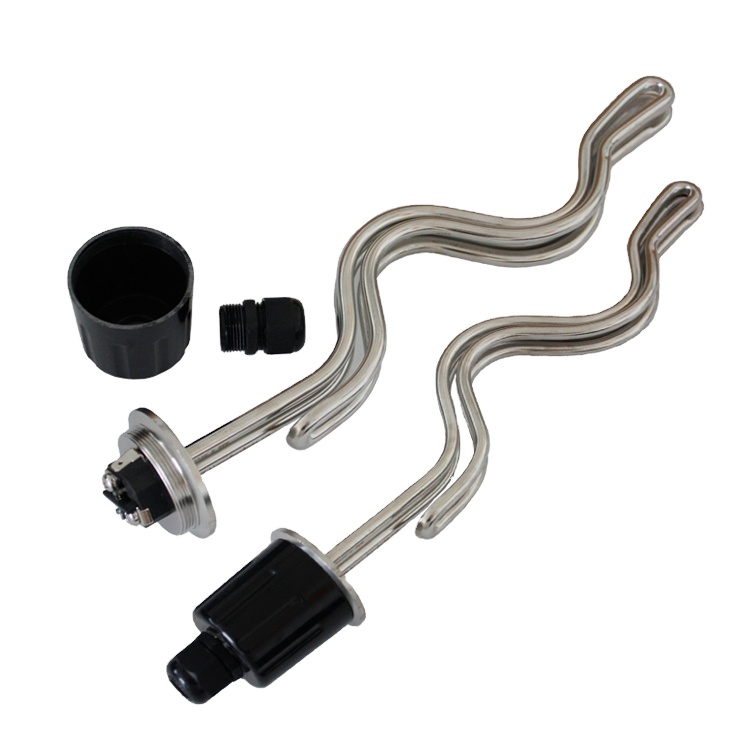
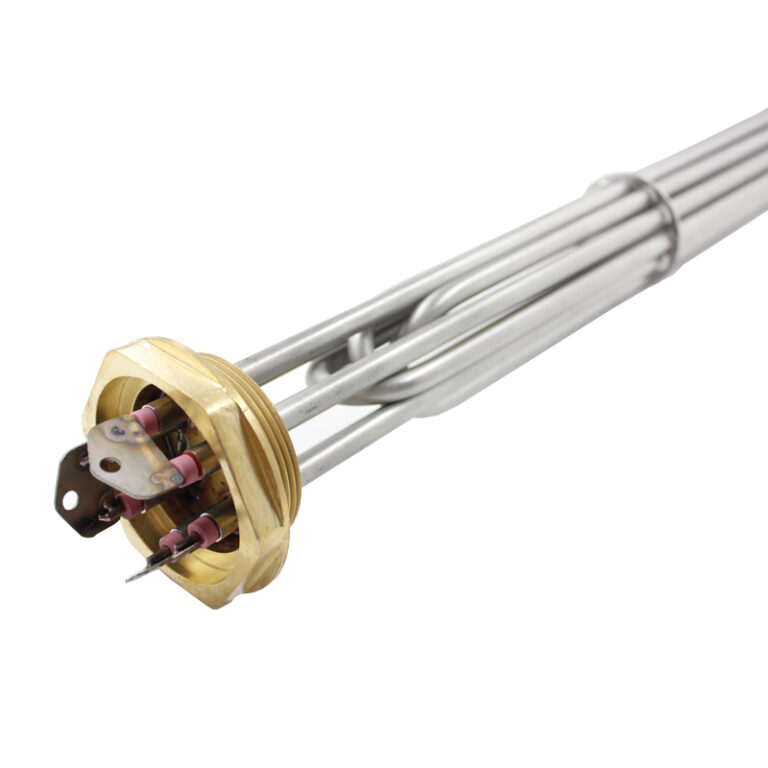
Large industrial storage tanks and circulation loops require direct heat transfer to minimize thermal lag and optimize energy efficiency. Flanged heating units consist of hairpin-bent tubular elements welded or brazed into an ANSI or DIN standard pipe flange, delivering direct thermal energy directly into the process fluid.
Unlike external jacket heaters or heat tracing, direct immersion achieves nearly 100% electrical-to-thermal energy conversion efficiency. This immediate heat transfer reduces warm-up cycle times and permits tight process temperature control across fluctuating operational demand profiles.
In our heavy industrial manufacturing practice, clients require heating assemblies capable of continuous operation under extreme thermal cycles. Applying properly configured flange immersion heaters ensures structural pressure containment while preventing localized fluid stagnation and thermal breakdown.
How Do Flange Rating and Face Type Impact High-Pressure Safety?
Industrial vessels operate under diverse pressure and temperature regimes that dictate mechanical flange selection. Standards such as ANSI/ASME B16.5 define pressure-temperature ratings from Class 150 up to Class 2500, establishing allowable stress limits for carbon steel and stainless steel flanges.
Selecting the correct mating face geometry is critical to prevent hazardous chemical or high-pressure steam leakage. Raised Face (射频) flanges are standard for general industrial services, whereas Ring Type Joint (RTJ) flanges are mandatory for extreme pressure and high-temperature hydrocarbon applications.
When engineering custom flange immersion heaters, our design team calculates flange bolting torque, gasket seating stress, and nozzle neck wall thickness. This structural verification guarantees reliable hermetic sealing throughout years of dynamic plant thermal cycling.
Why Is Watt Density Calibration Essential for Viscous and Corrosive Fluids?
Watt density defines the electrical power emitted per unit of active element surface area, expressed in watts per square centimeter. If watt density is specified too high for a viscous fluid, stagnant boundary layers overheat, causing fluid coking, carbonization, and rapid element burnout.
Clean water systems safely tolerate surface loads up to 10 到 12 W/cm² due to high natural convective heat transfer rates. 相比之下, heavy crude oil, 沥青, and thermal transfer fluids require conservative watt densities between 1.5 和 3.0 W/cm² to prevent chemical decomposition.
Calculating appropriate surface loading for flange immersion heaters demands precise knowledge of fluid thermal conductivity, viscosity curves, and operating flow rates. Matching power density to fluid dynamics eliminates hotspots and extends heating element operational lifespan.
How Does Element Bundle Spacing and Baffle Design Prevent Thermal Coking?
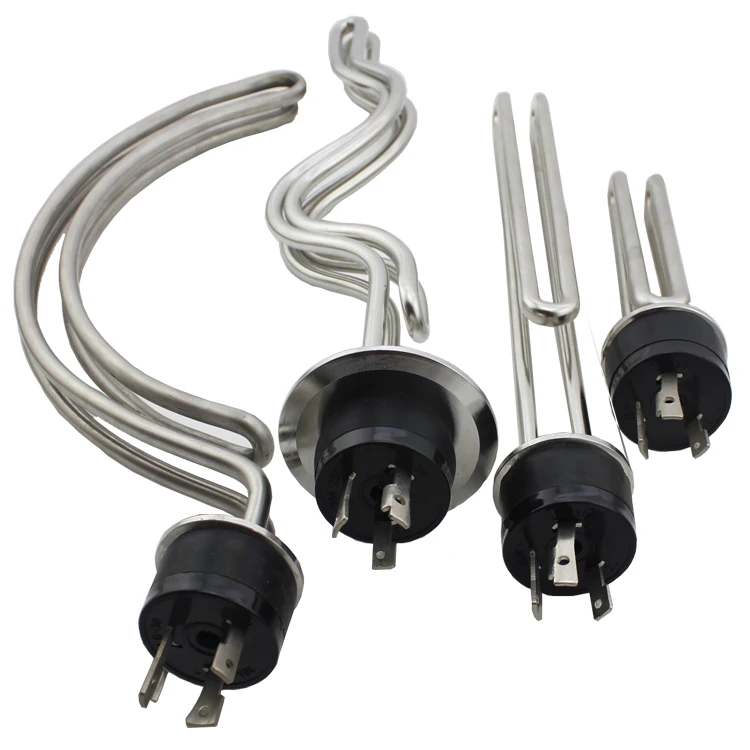
In high-capacity flange assemblies containing dozens of tubular heating hairpins, packing elements too tightly restricts natural convective circulation. Restricted flow creates localized boiling pockets and accelerates sludge accumulation at the bottom of the element bundle.
Engineers incorporate precision-spaced segmental baffles and bundle support plates along the immersion length. These internal baffles guide fluid cross-flow across element sheaths, promoting turbulent mixing and preventing flow-induced element vibration under high circulation velocities.
在瓦诺姆, 我们的 40+ years of electrical heating engineering expertise backed by ISO9001 quality controls ensures optimized bundle geometry. This attention to mechanical spacing prevents element-to-element contact and guarantees uniform heat dissipation throughout the vessel interior.
What Terminal Enclosure and Over-Temperature Controls Are Required?
Heavy industrial environments expose electrical connections to weather, corrosive chemical fumes, and washdown spray. Terminal enclosures must be selected according to site environmental standards, ranging from NEMA 4/4X weather-resistant housings to NEMA 7 explosion-proof enclosures for hazardous locations.
For high-temperature tanks operating above 150°C, a vented standoff section is installed between the vessel flange and the terminal box. This physical air gap dissipates conducted heat, protecting terminal block wiring and internal connection seals from thermal degradation.
Every industrial heating system requires multi-tier safety instrumentation to prevent catastrophic dry-run conditions. Integrating internal thermowells and sheath-clamped thermocouples into flange immersion heaters ensures immediate power cutoff if sheath temperatures exceed preset safety thresholds.
How Do Media Characteristics Dictate Sheath Selection and Surface Load?
| Process Medium | Recommended Sheath Alloy | Max Watt Density (瓦/平方厘米) | Typical Operating Temp (℃) |
|---|---|---|---|
| Deionized / Potable Water | 铬镍铁合金 800 / 316L Stainless | 8.0 – 12.0 | 60°C – 100°C |
| Light Fuel Oil / Lube Oil | 304 / 316L Stainless Steel | 3.0 – 4.5 | 40°C – 120°C |
| Heavy Crude Oil / Bitumen | 铬镍铁合金 800 / Carbon Steel | 1.2 – 2.2 | 80°C – 200°C |
| Mild Caustic Solutions | 316L Stainless / 铬镍铁合金 825 | 4.0 – 6.5 | 50°C – 95°C |
| High-Temp Thermal Oil | 铬镍铁合金 800 / 铬镍铁合金 600 | 2.0 – 3.5 | 150°C – 320°C |
For official equipment safety certification and testing standards in industrial and hazardous operating environments, consult the regulatory resources from UL 解决方案. Adhering to verified testing protocols ensures compliance across all international industrial markets.
To deepen your understanding of thermal calculations and specialized heating configurations, 探索我们的 瓦特密度计算指南, 我们的 explosion proof immersion heaters guide, 和我们的 定制 OEM 加热元件制造流程. These guides provide essential engineering context for system designers.
供应商审核清单: 5 签署采购订单之前索取的文件
- Certified Flange Mill Test Report (MTR): Material certificates confirming ASME/ASTM chemical composition, mechanical properties, and pressure ratings for the base flange forging.
- Hydrostatic Pressure Test Certificate: Factory hydrostatic test records validating weld seam integrity and flange joint pressure retention at 1.5 times the design working pressure.
- Dielectric Withstand and Insulation Test Report: Electrical quality documentation demonstrating zero leakage current and high insulation resistance under high-voltage testing.
- Thermal Modeling and Watt Density Calculation Sheet: Formal engineering calculations verifying fluid sheath temperatures and heat dissipation profiles under minimum flow conditions.
- Weld Procedure Specification (WPS) and Welder Qualifications: Documented welding certifications and non-destructive examination (NDE) records confirming ASME Section IX compliance.
Procuring custom flange immersion heaters requires thorough technical verification rather than relying on generic catalog ratings. Requesting complete quality documentation ensures dependable plant performance and avoids costly unplanned production shutdowns.
常见问题解答
问: What is the maximum power capacity that can be engineered on a single flange heater?
Standard industrial flange heaters range from 5 kW up to several megawatts on large 12-inch or 14-inch ANSI flanges. Multi-megawatt systems typically distribute heating circuits across staged electrical contactors to allow progressive power modulation and reduce grid inrush currents.
问: How do you prevent element burnout when liquid levels drop unexpectedly?
System designers install internal thermowells containing thermocouple or RTD sensors clamped directly to the upper heating elements. When liquid levels drop, exposed elements heat up rapidly, triggering an immediate safety interlock trip before sheath damage occurs.
问: Can flange immersion heaters be customized for highly corrosive chemical tanks?
是的, custom heating assemblies can be fabricated using specialized alloys including Incoloy 825, 哈氏合金C-276, 钛, or heavy fluoropolymer protective sleeves. Sheath metallurgy and flange cladding are selected specifically to match the chemical acidity and operating temperature profile.
问: What technical parameters should be provided to obtain an engineering quotation?
Provide fluid chemical composition, 工作电压, required heating power in kilowatts, flange size and pressure class, vessel insertion length limits, and target operating temperature. Our engineering team will review these inputs to engineer an optimized heating solution.
For custom engineering support on flange immersion heaters, share your tank dimensions, medium properties, 工作电压, and flange pressure requirements with our technical team. We will review your process specifications to deliver a robust, high-performance heating assembly.