船用浸入式加热器: 7 Anti-Corrosion Checks for Offshore Platforms

海上加热器可能在达到其电气额定值之前很久就发生故障. Salt spray attacks terminals and housings, seawater changes the material decision, and a poorly controlled sheath can create deposits or local overheating. 这 marine immersion heaters guide gives marine OEMs a practical review sequence for corrosion, 传热, 密封, grounding, and project documentation before approving a heater for a vessel or offshore platform.

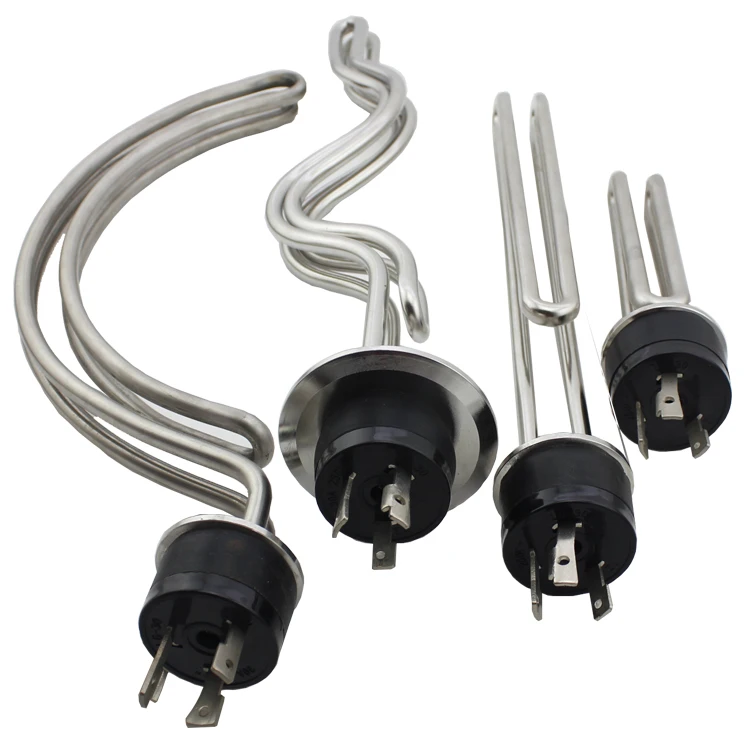
用于船舶液体加热系统的船用浸入式加热器
Immersion heater selection must follow the liquid, tank, and installation environment.

What Makes Marine Immersion Heaters Different?

Marine service combines liquid exposure with a salt-laden atmosphere, 振动, restricted maintenance access, and high consequences for downtime. The heater may warm freshwater, 海水, hydraulic fluid, fuel-related liquids, or process water, and each medium creates a different corrosion and heat-transfer problem.

Do not specify a heater from the word “marine” alone. Before we develop a quotation for marine immersion heaters, we ask for the liquid chemistry, 专注, normal and maximum temperature, tank material, 浸入深度, 循环, vessel zone, and available electrical supply.

How Should You Select Sheath Material for Salt Water?

Seawater can expose a heater to chloride attack, crevice corrosion, galvanic coupling, 和存款. The correct sheath is not chosen by corrosion resistance in isolation; it must also transfer heat at the intended surface load and remain compatible with the tank, 法兰, fasteners, 及清洁方法.

Ask the supplier to identify the exact sheath alloy and the areas that remain exposed after assembly. A protected heated section can still fail at a weld, bend, threaded connection, 海豹, or terminal transition if the material and geometry create a local corrosion cell.

Vanorm manufactures immersion heaters, tubular elements, finned heaters, 筒式加热器, and coated elements for custom applications. Our 40+ years of heating experience supports material reviews, but the final choice must be tied to the actual fluid and project specification rather than a generic “stainless steel” description.

Why Does Watt Density Matter in a Marine Tank?

A heater with excessive surface load can create a hot sheath even when the tank temperature looks acceptable. Low liquid movement, partial immersion, scale, or sludge increases the thermal resistance around the element and pushes the sheath temperature higher.

For marine immersion heaters, request the power, active surface area, 瓦特密度, 加热长度, 冷端长度, and minimum liquid level. The supplier should also state whether the calculation assumes natural convection, forced circulation, or a defined flow rate.

Use staged circuits or proportional control when the process allows it. A correctly positioned sensor, low-level cut-out, and independent over-temperature protection help prevent an exposed element from remaining energized during a pump, valve, or level-control fault.

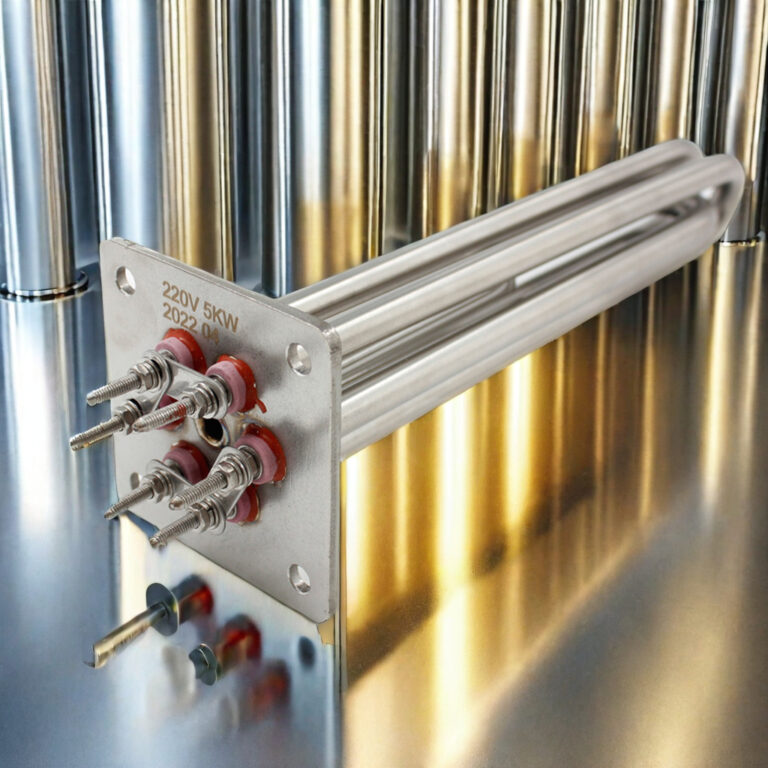
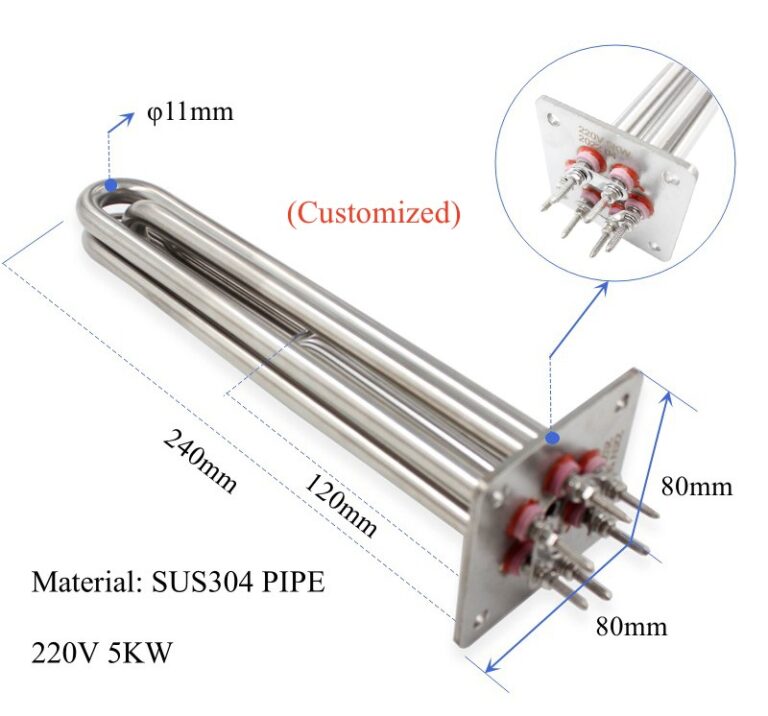
marine immersion heaters and custom tubular heating elements
Custom tubular geometry helps match the element to tank clearance and service conditions.

How Do Sealing and Grounding Protect Offshore Equipment?

Water ingress often starts outside the heated tube. Cable glands, terminal boxes, flange faces, gasket compression, and cable routing must be reviewed as one assembly. A sound sheath does not compensate for a terminal enclosure that allows salt moisture to reach live connections.

Specify the enclosure and connection requirements for the actual installation zone, including washdown, spray, 缩合, 振动, and access for inspection. Request drawings showing terminal position, sealing surfaces, gasket material, and the protection method at every transition.

Grounding and bonding should be verified by the vessel or platform electrical engineer. The heater body, tank, protective conductor, cable screen, and control cabinet must follow the project’s approved electrical design. Do not treat a continuity test on the bench as proof that the installed system is correctly bonded.

Which Marine Compliance Documents Should You Request?

Marine projects often specify a vessel type, installation zone, flag, class society, electrical standard, or owner approval process. The required evidence therefore depends on the contract. Ask the buyer’s technical authority to identify the governing rules before production begins.

For general electrical safety documentation, review the certification scope and product information from UL 解决方案. This is a general reference, not a substitute for a marine class approval. If the project requires DNV, ABS, Lloyd’s Register, or another authority, request the exact approval route and certificate scope in writing.

Our company profile records UL, CE, CQC, 和 ISO9001 证书, exports to more than 60 countries, and supports 100% custom-engineered OEM/ODM solutions. Buyers should still confirm which certificate applies to the supplied heater, the production batch, and the final installed configuration.

How Should You Plan Inspection and Replacement Offshore?

Restricted access changes the cost of a heater failure. Include removal clearance, lifting points, flange access, 电缆长度, isolation steps, spare-part identification, and the time required to drain or make the tank safe. A heater that is inexpensive to buy may be expensive to replace offshore, especially when marine immersion heaters are installed below deck or inside a protected process skid.

Define inspection triggers before commissioning: 绝缘电阻, earth continuity, terminal condition, sheath deposits, leakage, temperature stability, and current balance. Record the baseline values when the heater is new so later drift can be identified before a trip or shutdown.

For related liquid-heating decisions, 比较我们的 watt density calculation guide, 这 铬镍铁合金 800 和 316 stainless steel selection guide, 和我们的 定制OEM加热元件流程. These resources help connect marine design choices with surface load, 材料, and manufacturing details.

供应商审核清单: 5 签署采购订单之前索取的文件

  1. Material and chemical-service statement: Identify the sheath, weld, fastener, gasket, and terminal materials against the actual liquid and atmosphere.
  2. 热设计表: 确认电源, 有效长度, 瓦特密度, flow or circulation assumption, minimum level, and control limits.
  3. Installation and sealing drawing: Check flange, gasket, 终端外壳, cable entry, clearances, and maintenance access.
  4. Electrical and grounding documents: Verify voltage, 阶段, 反抗, 绝缘, earth continuity, interlocks, and approved connection details.
  5. Project approval matrix: List the required class, flag, owner, CE/UL, inspection, and batch traceability documents before shipment.

A quotation is not complete when it lists only kilowatts and a sheath material. For marine immersion heaters, the purchase file should show how the element survives the liquid, how the assembly is sealed, how abnormal operation is stopped, and which authority will accept the documentation.

常见问题解答

问: Are standard immersion heaters suitable for seawater service?
Not automatically. Seawater chemistry, chloride exposure, 瓦特密度, 循环, tank material, and electrical protection must be reviewed together. Ask the supplier to document the exact material and application assumptions.

问: What is the most common marine heater selection mistake?
Choosing by total power and nominal stainless-steel grade alone is a common mistake. The RFQ should also define active surface load, liquid level, 密封, grounding, access, and the project’s approval documents.

问: Does CE or UL approval equal marine class approval?
不. General product certification and marine class approval address different requirements. Confirm the exact authority, certificate scope, installation zone, and inspection route specified by the vessel or offshore project.

问: What should I send for a marine heater quotation?
Send the liquid chemistry, tank drawing, temperature target, heat-up time, 循环, 浸入深度, 电压, available space, cable and terminal requirements, vessel zone, and required class or owner documentation. This allows our OEM team to review the design before quoting.

For marine immersion heaters, send our team your liquid profile, tank drawing, heat-up target, 电力供应, installation zone, and required approval documents. We will review the corrosion, 热的, 密封, and control requirements before recommending a custom design.

WhatsApp: +86 153 8072 6061

类似文章