If an industrial oven reaches setpoint quickly but the finished part still fails inspection, the heating method may be the real problem. Surface temperature, internal heat penetration, airflow, coating absorption, and load spacing all affect the result. นี้ infrared vs convection heating guide gives buyers a practical framework for choosing oven technology by process behavior instead of headline heat-up speed.
What Should You Compare Before Choosing Oven Heating?
Start with the workpiece and the required result. Record the material, สี, surface finish, ความหนา, moisture or solvent content, target temperature, allowable surface temperature, cure or drying window, and the uniformity required across the load.
Infrared heating transfers energy directly to exposed surfaces, while convection heating uses moving hot air to transfer energy around the load. Neither method is automatically better. A practical infrared vs convection heating decision depends on how the workpiece absorbs energy and how heat must move through it.
When Does Infrared Heating Make More Sense?
Infrared can be useful when the target surface absorbs radiant energy efficiently and the production line benefits from fast response. It can place energy close to the workpiece without heating the entire chamber mass to the same degree.
The result depends on wavelength, emitter spacing, surface color, angle, distance, and line-of-sight. A dark coating and a reflective metal surface may respond very differently even when both parts enter the same oven at the same time.
Ask for a test using the real coating, substrate, ความหนา, and conveyor speed. A fast surface response is not enough if the substrate remains cold, solvent release becomes uneven, or the part exceeds its allowable surface temperature before the core catches up.
When Is Convection Heating the Safer Choice?
Convection heating is often easier to control when the load has complex geometry, multiple faces, hidden surfaces, or a thickness that requires gradual heat penetration. The air stream can surround parts that do not have a direct view of an infrared emitter.
Uniformity still depends on fan placement, duct design, recirculation, leakage, filter condition, and load arrangement. A large fan does not guarantee even temperature if one rack blocks the return path or if hot air bypasses the work zone.
For convection systems, request the assumed airflow, temperature profile, fan curve, heater staging, and measurement points. These details are more useful than a single oven rating because they show how the supplier expects the load to heat in production and support a fair infrared vs convection heating RFQ comparison.

Can Infrared and Convection Be Used Together?
Many production ovens use a hybrid sequence: radiant energy raises the exposed surface quickly, then recirculated air supports penetration and equalization. This can reduce the conflict between short cycle time and internal temperature uniformity when the process is designed around measured load behavior.
A hybrid design adds control points. The recipe should define emitter power, air temperature, fan speed, transition timing, and the point at which the surface and core are close enough to proceed. Without that sequence, the two systems can fight each other instead of improving the process.
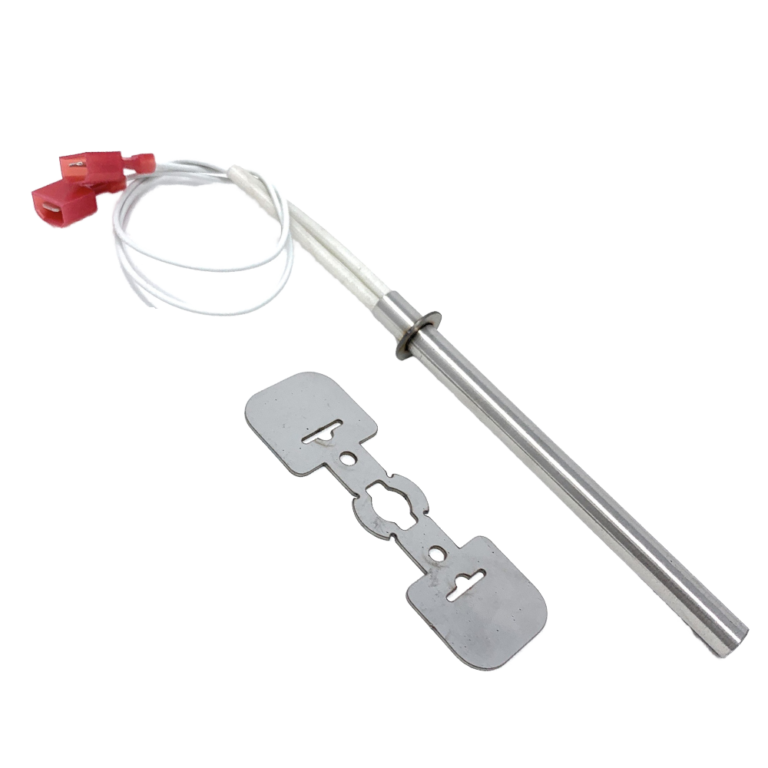
When we develop custom heating elements for ovens and machinery, we review the available space, electrical supply, target zone, and service access together. Vanorm also manufactures immersion heaters, เครื่องทำความร้อนแบบตลับ, เครื่องทำความร้อนแบบครีบ, และองค์ประกอบพิเศษ, allowing the heating architecture to follow the equipment rather than forcing one standard part.
How Should Buyers Calculate Energy and Throughput?
Compare useful heat delivered to the workpiece, not only installed kilowatts. Include warm-up time, idle losses, exhaust or purge requirements, conveyor speed, rejected parts, changeover time, and the energy used to heat chamber walls, fixtures, and recirculated air.
Infrared may reduce chamber warm-up in some line designs, but reflective surfaces, shields, and emitter aging can change the result. A sound infrared vs convection heating cost comparison must include these effects. Convection may offer stable treatment for complex loads, but fan power, leakage, and long heat-up periods must also be included in the operating model.
Use a production trial to record kWh per accepted part, รอบเวลา, temperature variation, and rework rate. That evidence is more valuable than a generic efficiency claim because it connects the heating method to the buyer’s actual process.
How Do Infrared and Convection Compare in an RFQ?
| RFQ factor | Infrared review | Convection review | Evidence to request |
|---|---|---|---|
| Load absorption | Surface color, reflectivity, wavelength, view angle | Air contact, เรขาคณิต, hidden surfaces, circulation | Trial data using the actual workpiece |
| Heat penetration | Risk of hot surface and cold core | Gradual penetration with airflow and soak | Surface/core temperature profile |
| Uniformity | Emitter spacing and line-of-sight control | Fan, duct, rack, and return-air design | Loaded temperature mapping |
| Throughput | Fast response when absorption is favorable | Stable treatment for complex or thick loads | Accepted parts per hour and cycle recipe |
| การซ่อมบำรุง | Emitter condition, reflectors, distance, controls | Fans, filters, seals, ducts, heater stages | Inspection and replacement schedule |
สำหรับคำถามด้านความปลอดภัยทางไฟฟ้าและการรับรอง, ตรวจสอบข้อมูลผลิตภัณฑ์และบริการที่เกี่ยวข้องจาก ยูแอล โซลูชั่น. This general reference does not certify a particular oven recipe or guarantee uniformity. The supplier must document the test conditions, measurement method, and applicable certification scope.
สำหรับบริบททางวิศวกรรมที่เกี่ยวข้อง, เปรียบเทียบของเรา finned tubular heater guide, ที่ คู่มือการคำนวณความหนาแน่นวัตต์, และเรา กระบวนการองค์ประกอบความร้อน OEM แบบกำหนดเอง. These resources connect oven heating decisions with airflow, โหลดพื้นผิว, and manufacturing control.
รายการตรวจสอบการตรวจสอบซัพพลายเออร์: 5 เอกสารที่ต้องขอก่อนลงนามในคำสั่งซื้อ
- Workpiece test report: Record material, การเคลือบ, ความหนา, การจัดเรียงโหลด, cycle recipe, surface/core temperatures, and accepted-part result.
- Thermal mapping report: Show empty and loaded oven measurements, sensor locations, tolerance, and the stabilization period used.
- Heating and airflow design: Request emitter layout, wavelength or heater details, fan curve, duct path, heater staging, and control points.
- Energy and throughput calculation: Include kWh per cycle or accepted part, warm-up, idle loss, รอบเวลา, and expected production rate.
- Maintenance and certification file: List component inspection, replacement intervals, electrical tests, การติดฉลาก, and the applicable certification scope.
A supplier should be able to explain why its selected method fits your workpiece and how the result was measured. Ask for the assumptions behind the infrared vs convection heating recommendation, then compare them with your actual load, recipe, and acceptance criteria before approving the oven. The same infrared vs convection heating review should define who owns recipe validation and maintenance.
คำถามที่พบบ่อย
ถาม: Is infrared heating always faster than convection?
Not always. Infrared can respond quickly when the surface absorbs the selected radiation, but the core may still need time to heat. Compare accepted-part cycle time, not only emitter response.
ถาม: Which method is better for thick or complex parts?
Convection is often easier to evaluate for thick or hidden surfaces because moving air can surround the load. The final choice still depends on geometry, airflow, วัสดุ, การเคลือบ, and the required temperature profile.
ถาม: Can an existing convection oven be converted to infrared?
Possibly, but the conversion requires a review of electrical capacity, emitter clearance, controls, shielding, ventilation, fire risk, and the workpiece recipe. Treat it as a process redesign rather than a simple heater replacement.
ถาม: What information should I send for an industrial oven heating quotation?
Send the workpiece material, การเคลือบ, ขนาด, target temperature, heat-up and soak profile, line speed, การจัดเรียงโหลด, แรงดันไฟฟ้า, chamber drawings, uniformity tolerance, และข้อจำกัดในการบำรุงรักษา. Our OEM team can then review the full duty before recommending a custom design.
For an infrared vs convection heating review, send our team your workpiece, การเคลือบ, temperature profile, line speed, การจัดเรียงโหลด, chamber drawing, and uniformity target. We will review the heating duty before recommending a custom solution.