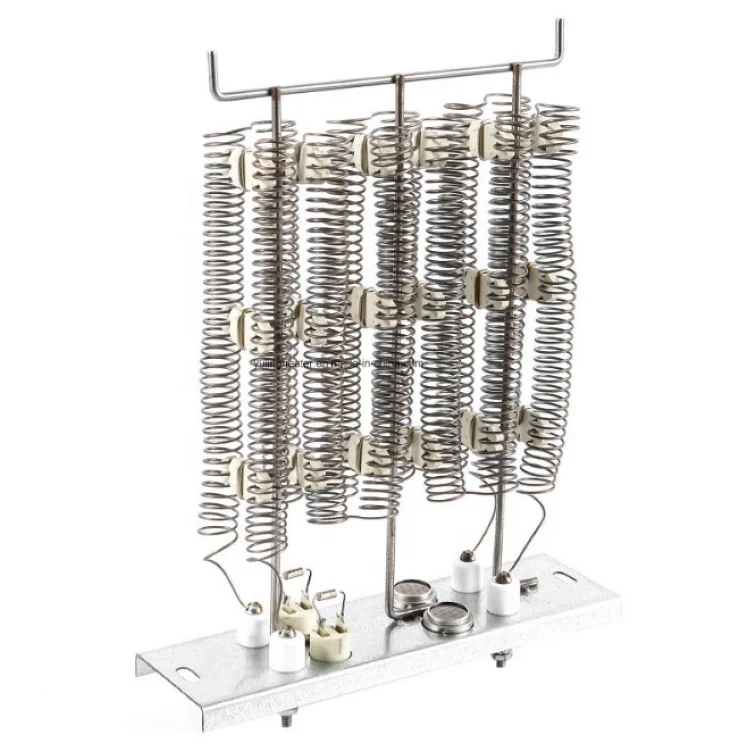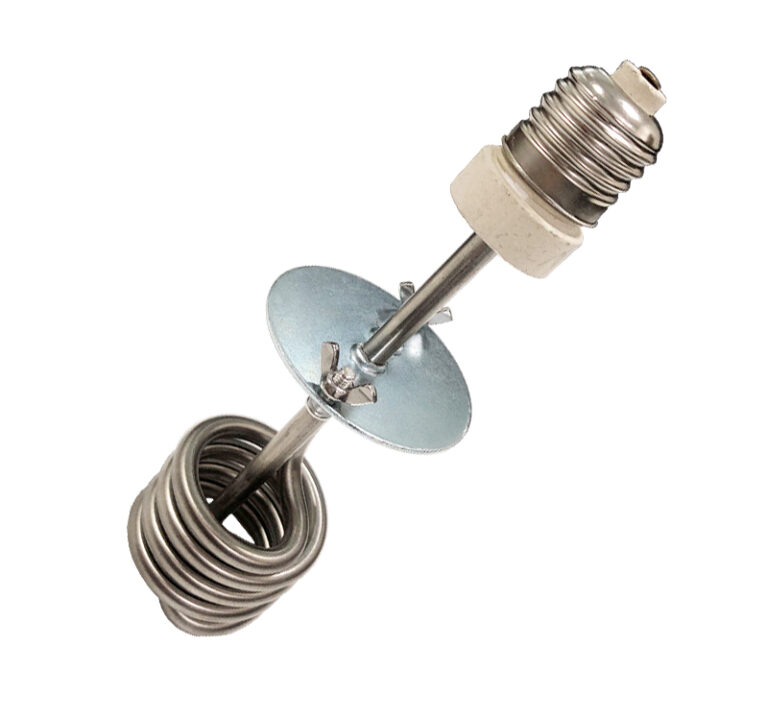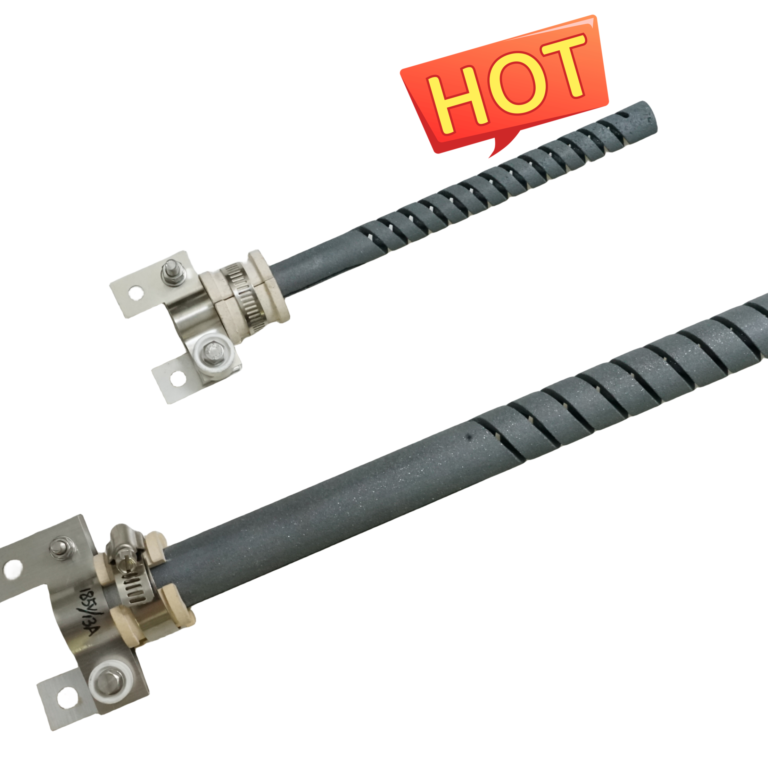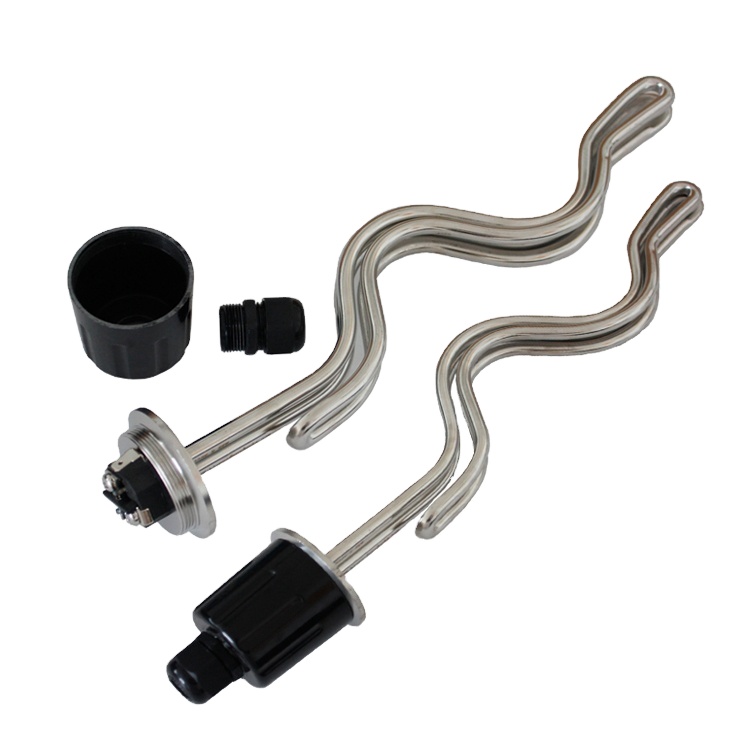
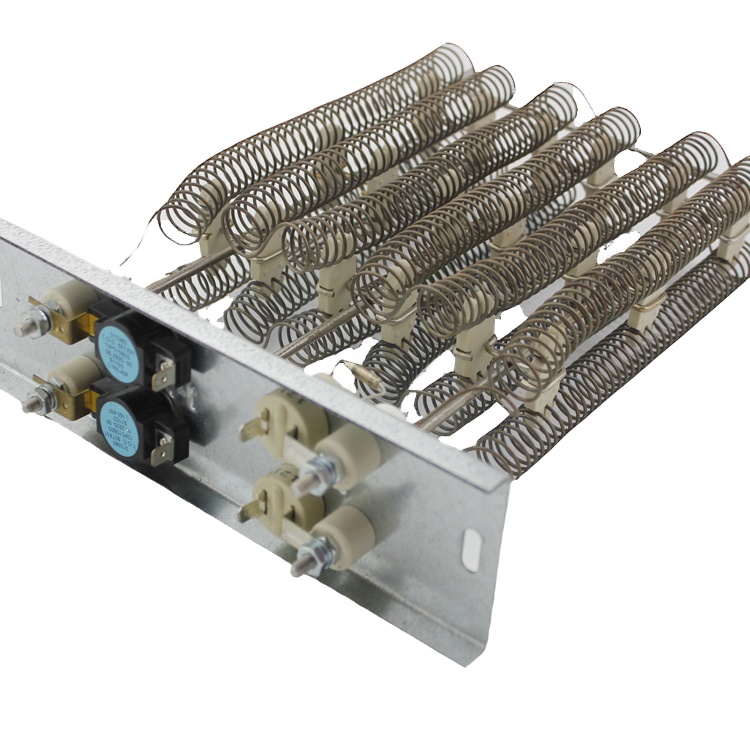
Le concept de base de réchauffeur de conduit à serpentin ouvert
Avant de discuter des serpentins adaptés aux réchauffeurs de conduits d'air, nous devons d'abord comprendre le concept de base des réchauffeurs de conduits d'air. Un réchauffeur de conduit d'air est un appareil installé dans un système de chauffage, ventilation et climatisation (CVC) système dont la fonction principale est de réguler la température intérieure en chauffant l’air. L'équipement est couramment utilisé dans le résidentiel, environnements commerciaux et industriels pour offrir des conditions de vie et de travail confortables.
Le principe de fonctionnement du réchauffeur de conduit d'air est relativement simple. Il chauffe l'air en plaçant un élément chauffant (comme un caloduc électrique ou un fil chauffant électrique) dans le trajet du flux d'air. L'air chauffé est distribué dans chaque pièce par le système de conduits d'air, obtenant ainsi un contrôle uniforme de la température. Les réchauffeurs de conduits à serpentin ouvert peuvent être divisés en plusieurs types, y compris les radiateurs à résistance, chauffe-vapeur et chauffe-eau, dont les radiateurs à résistance sont le type le plus courant.
Dans les radiateurs à résistance, open coil duct heaters are a common configuration. This type of heater uses resistance coils to generate heat through an electric current and directly heat the passing air. Because of its high efficiency, reliability and easy maintenance, the open coil duct heater is widely used in various air duct heating systems.
The design and selection of open coil duct heaters need to consider a number of factors, such as the total heating load of the system, air flow rate, temperature requirements of the space, et efficacité énergétique. Only after fully understanding the basic concepts of the air duct heater can the appropriate coil type be selected more effectively to ensure the performance and reliability of the system. Understanding these fundamentals helps to make more informed decisions in real-world applications that optimize the overall functionality of an HVAC system.
Coil type commonly used in air duct heaters
Open coil duct heater is widely used in modern building and industrial environment, and one of its core components is heating coil. The application of different types of coils in air duct heaters is different, mainly including resistance coils and inductors.
Resistance coils are usually made of nickel chromium alloy or iron chromium aluminum alloy. These materials are known for their high heat resistance and good electrical conductivity. Ni-cr and Fe-Cr alloys maintain stable resistance characteristics at high temperatures, ensuring efficient operation of open coil duct heaters. Resistance coils work by passing a current through the coil to generate heat, which heats air. This type of coil has the advantages of simple installation, low cost and easy maintenance, so it is widely used in various occasions.
Inductors use the principle of electromagnetic induction to heat air by generating a magnetic field. The design of inductors is often more complex, but the advantage is that they can provide a more uniform heating effect. The core component of an inductor coil is a coil made of conductive material that, when passed through an alternating current, creates an alternating magnetic field around it. This alternating magnetic field interacts with molecules in the air, creating heat. Inductors perform well in some applications that require precise temperature control, despite their relatively high cost.
When selecting the coil type of air duct heater, it is necessary to consider the requirements of specific application scenarios. Resistance coils are suitable for most general heating needs, while inductors are suitable for heating tasks that require greater accuracy and uniformity. Understanding the characteristics and advantages of the various coils helps to make the best choice to ensure the efficient operation of the open coil duct heater in different environments.
Advantages and disadvantages of different coil types
When choosing an air duct heater, it is crucial to understand the advantages and disadvantages of resistance coils and inductors. Resistance coils are known for their efficient heating performance and simple construction. Due to their low cost, resistance coils are often used in a variety of industrial and commercial applications. Cependant, the main disadvantage of this coil is that it is easy to overheat, which can cause damage to the equipment. En outre, resistance coils have higher energy consumption, which may increase long-term operating costs.
En revanche, inductor coils offer higher safety and longer service life. They generate less overheating during operation, reducing the associated maintenance requirements. The manufacturing cost of inductors is high, which makes their initial investment large. En outre, because the inductor coil requires a complex control system, the difficulty of installation and maintenance increases accordingly.
Considering the advantages and disadvantages of the resistance coil and the inductor coil, the selection of the appropriate coil type needs to be determined according to the specific application requirements. Par exemple, resistance coils are an ideal choice for applications where efficient heating is required and budgets are limited. If safety and equipment life are the primary concerns, then inductors are more suitable. Knowing how each coil performs in different applications helps you make an informed decision when choosing an open coil duct heater.
Key factors in choosing the right type of coil
When selecting the coil type of the air duct heater, it is first necessary to clarify the power requirements of the equipment. Different application scenarios have different power requirements. Choosing the right power can not only improve the working efficiency of the device, but also avoid the problem of overload or insufficient power. En général, the open coil duct heater is the first choice for many applications with high power requirements due to its efficient heat and cold conduction.
The installation environment is also an important consideration. Open coil duct heaters may be installed in different environments, including industrial plants, commercial buildings and residential buildings. Each environment has different requirements for the coil. Par exemple, in humid or chemical environments, coils made of corrosion-resistant materials need to be selected to ensure their service life and safety.
Budget constraints often play a key role in the decision-making process. Although open-coil coils are generally low cost and simple to install, their maintenance costs are relatively high. enclosed coils, même si l'investissement initial est plus important, peut avoir plus d'avantages en termes de maintenance et de durée de vie. Donc, une combinaison d'investissement initial et de coûts de maintenance à long terme peut aider à sélectionner une solution abordable.
Enfin, l'efficacité thermique et la sécurité sont des facteurs qui ne peuvent être ignorés lors de la sélection du type de bobine. Qu'il s'agisse d'une bobine ouverte ou d'une bobine fermée, sa conception doit avoir des performances de transfert de chaleur efficaces pour économiser de l'énergie et améliorer l'efficacité du chauffage. En même temps, la sécurité est également cruciale, et choisir des bobines avec protection contre la surchauffe et résistance au feu peut réduire efficacement le risque d'accidents.
Prendre en considération les facteurs ci-dessus, la sélection du type de serpentin le plus approprié peut non seulement améliorer les performances et la fiabilité du réchauffeur de conduit à serpentin ouvert, mais également garantir son efficacité et son économie dans différents scénarios d'application.
| article | valeur |
| Taper | réchauffeur de conduit à serpentin ouvert |
| Source d'énergie | Électrique |
| Dimension(L*L*H) | Taille personnalisée |
| Poids | 0.5KG |
| Tension | 230V |
| garantie | 1 Année |
| Matériel | Acier inoxydable |
| Points de vente clés | Longue durée de vie |
| Certificats | CE, RoHS, CQC, OIN,UL |
| Utilisation | Sèche-linge |
| Taper | Pièces détachées pour sèche-linge |