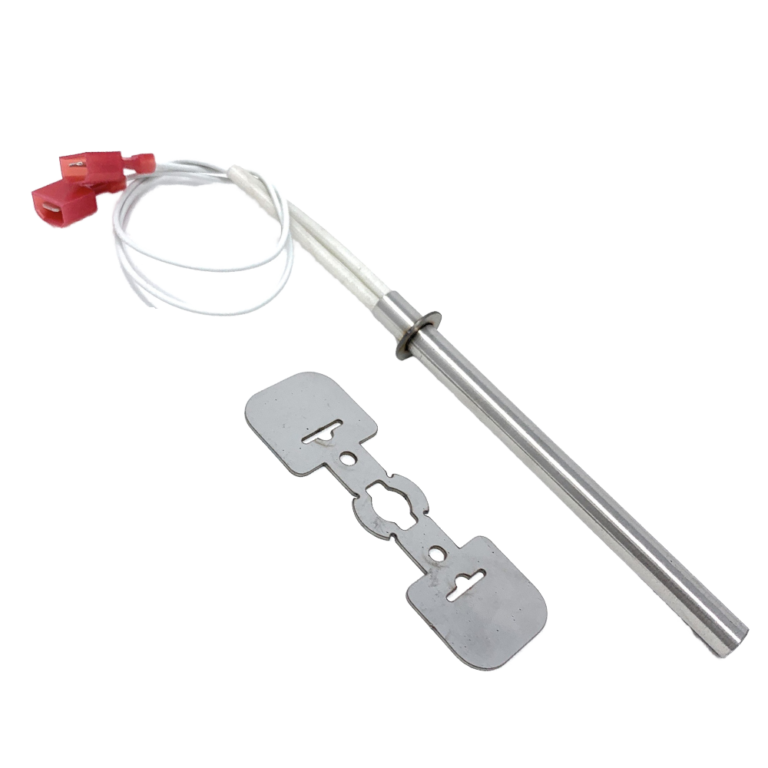
In precision injection molding and die casting, loose bore clearances quickly lead to erratic thermal profiles and premature burnout. Operating high-load mold heating cartridge heaters with excessive air gaps causes rapid core failure. At Taizhou Yuling, nuestro 40+ years of manufacturing experience ensures tight dimensional tolerances that maximize thermal conduction.
Tabla de contenido
Why Hole Clearance Dictates Mold Heating Cartridge Heaters Efficiency
The primary mechanism of heat dissipation in tooling is direct metal-to-metal conduction. When you install heating elements into drilled platen holes, stagnant air pockets act as powerful thermal insulators. In fact, air has a thermal conductivity of roughly 0.026 W/(m·K), compared to over 35 W/(m·K) for standard H13 tool steel.
Even a microscopic air gap of 0.005 pulgadas (0.127 milímetros) forces the internal nickel-chromium resistance wire to operate at extreme temperatures. This thermal bottleneck accelerates sheath oxidation, degrades internal magnesium oxide insulation, and causes core resistance wire rupture. Keeping bore clearance below 0.003 inches ensures rapid heat dissipation into the mold cavity.
In our specialized manufacturing practice, we swage our elements to achieve high-purity MgO compaction densities exceeding 3.2 gramos/cm³. This dense internal structure ensures that heat generated at the core transfers immediately to the outer sheath, preventing hot spots and extending continuous operating life. For deeper insights on resolving element burnout, explore our detailed cartridge heater troubleshooting guide.
Calculating Fit Tolerances and Thermal Expansion for Mold Heating Cartridge Heaters
Achieving a reliable sliding fit requires balancing nominal heater diameter against operating thermal expansion. During initial heat-up, high-nickel alloy sheaths like Incoloy 800 o 304 stainless steel expand faster than the surrounding tool steel block. If the initial clearance is too tight, the heater can permanently seize in the platen bore.
We recommend precision reaming all mold insertion holes to an ISO H7 tolerance standard rather than relying on rough twist drills. For standard nominal 1/2-inch (12.7 milímetros) cartridges, our factory grinds the outer sheath to a consistent 12.62 mm ±0.02 mm. This ensures an optimal cold installation clearance of 0.05 mm to 0.08 milímetros, which closes smoothly under thermal expansion.
Proper dimensional planning also prevents sheath distortion and localized bulging during thermal cycling. You can further examine how proper surface load ratios protect elements by reviewing our guide on cálculo de densidad de vatios. Consistent hole depth and uniform diameter along the entire bore prevent uneven thermal stress.
Optimal Watt Density and Thermal Zone Control in Precision Molds
High watt density is essential for rapid mold preheating and short injection molding cycle times. Sin embargo, operating at watt densities above 20 W/cm² (130 Ancho/pulg²) requires strict adherence to tight bore tolerances. Operating high-load heaters in loose holes causes immediate sheath blistering and catastrophic dielectric breakdown.
For complex runner manifolds and multi-cavity tooling, distributed wattage profiling provides uniform cavity temperature control. We manufacture custom cartridge elements with higher coil concentration at the ends to counteract natural platen edge heat loss. Integrating built-in Type J or Type K thermocouples directly at the sheath tip enables ultra-responsive PID closed-loop feedback.
Our engineering team verifies each custom thermal zone design to ensure balanced temperature distribution across your mold face. Discover more strategies for maximizing component endurance in our dedicated guide to prolongar la vida útil del elemento calefactor. This multi-zone balancing reduces reject rates and guarantees consistent melt viscosity.

Engineering Fit and Tolerance Reference Chart
Selecting the proper combination of sheath fit and surface watt density is essential for reliable tool performance. The reference table below details how hole clearance directly influences operating sheath temperature, maximum permissible watt density, and expected service life.
| Bore Clearance (Pulgadas / milímetros) | Max Permissible Watt Density | Core-to-Sheath ΔT | Expected Service Life | Primary Risk Factor |
|---|---|---|---|---|
| < 0.002″ (< 0.05 milímetros) | 30 W/cm² (195 Ancho/pulg²) | Bajo (< 40° C) | 30,000+ Operating Hours | Difficult extraction if seized |
| 0.002″ – 0.004″ (0.05 – 0.10 milímetros) | 20 W/cm² (130 Ancho/pulg²) | Moderate (40 – 80° C) | 20,000 – 25,000 Hours | Optimal balance for tooling |
| 0.005″ – 0.008″ (0.12 – 0.20 milímetros) | 12 W/cm² (75 Ancho/pulg²) | Alto (100 – 160° C) | 8,000 – 12,000 Hours | Thermal lag and cycle drift |
| > 0.008″ (> 0.20 milímetros) | < 6 W/cm² (< 40 Ancho/pulg²) | Severe (> 220° C) | < 2,000 Hours | Rapid dielectric burnout |
Anti-Seize and Extraction Best Practices for Tooling Maintenance
A seized cartridge heater can stop a production line for hours while toolmakers drill out damaged components. Using conventional petroleum-based grease inside heater bores is a common mistake that causes severe carbonization. At temperatures above 250°C, organic greases break down into electrically conductive carbon residue, creating immediate short circuits.
En cambio, apply a microscopic film of high-temperature boron nitride or synthetic conductive release paste. Además, tool designers should always incorporate through-holes or rear knockout access ports behind blind bores. This allows technicians to tap out old heaters during routine mold maintenance without damaging precision platen surfaces.
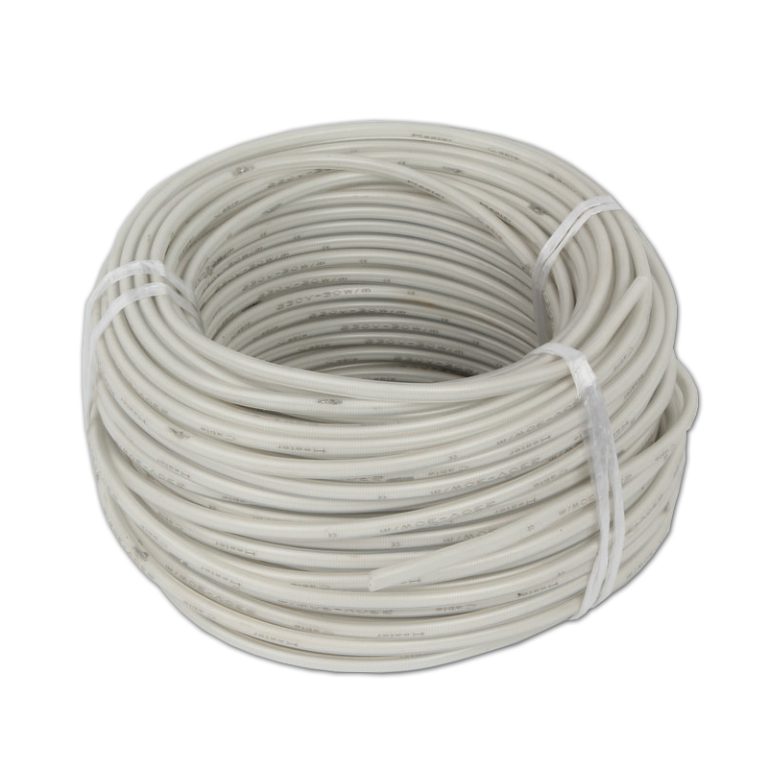
When specifying lead wire configurations, high-temperature flexible fiberglass silicone insulated leads protect against mechanical abrasion during platen clamping. For comparing tubular heating formats with compact cartridge designs, consult our analysis on tubular vs cartridge heater element efficiency. Proper lead termination ensures dependable operation under continuous press vibration.
Lista de verificación de auditoría de proveedores: 5 Documentos a solicitar antes de firmar una orden de compra
Before committing to an OEM procurement contract for heating elements, verify that your manufacturer enforces strict quality assurance protocols. Request the following five critical quality documents with every production batch:
- Laser Micrometer Sheath Dimensional Report: Verifies outer diameter tolerances within ±0.02 mm across the entire length to guarantee an exact sliding fit.
- High-Purity Swaged MgO Density Certification: Confirms dielectric compaction density exceeds 3.2 g/cm³ for maximum thermal transfer and electrical insulation.
- Dielectric Hi-Pot and Insulation Resistance Certificate: Proves 100% testing at 1500V AC with cold insulation resistance exceeding 1,000 MΩ at 500V DC.
- Raw Material Mill Test Certificate (MTC): Authenticates chemical composition of seamless Incoloy 800/840 or SS321 sheaths and high-grade NiCr 80/20 alambre de resistencia.
- Helium Leak and Hermetic Seal Verification: Validates moisture barrier integrity at terminal ends to prevent humidity absorption during oceanic transport and warehouse storage.
Frequently Asked Questions About Mold Heating Cartridge Heaters
Q1: What is the recommended hole clearance for high watt density mold heating cartridge heaters?
The ideal hole clearance for watt densities above 20 W/cm² is 0.002 a 0.003 pulgadas (0.05 mm to 0.08 milímetros). At Taizhou Yuling, our sheaths are precision-ground to tight tolerances of ±0.02 mm for H7 reamed holes. Always request micrometer inspection data from suppliers to prevent loose fits that cause rapid thermal burnout.
Q2: Why do cartridge heaters seize inside mold holes, and how can toolmakers prevent it?
Heaters seize primarily due to severe sheath oxidation and carbonization of non-rated petroleum lubricants under heat. In our factory, we use Incoloy alloys resisting oxidation up to 750°C and recommend dry boron nitride coatings. Toolmakers should also design rear knockout ports for effortless element removal during maintenance.
Q3: How does sheath material selection influence heat transfer and tool life?
Sheath materials dictate maximum operating temperature, thermal expansion rates, and corrosion resistance against outgassing vapors. We engineer our premium cartridge elements with Incoloy 800 o 321 stainless steel for structural integrity up to 750°C. You should request raw material mill test certificates to ensure genuine high-temperature seamless tubing.
Q4: Can we operate cartridge heaters with looser fit if we reduce watt density?
Reducing surface watt density below 10 W/cm² allows slightly larger hole clearances up to 0.006 inches without immediate burnout. Sin embargo, thermal lag will increase and temperature response will slow down, resulting in less precise mold cavity control. To validate thermal efficiency, evaluate your supplier’s watt density calibration and internal thermocouple placement data.
To review fundamental thermal conductivity standards and metallic expansion coefficients in tooling, consult reference data published by the Engineering ToolBox. Understanding thermal dissipation rates helps tooling engineers calculate exact cavity heat-up curves.
Investing in precision engineered mold heating cartridge heaters ensures uniform cavity temperatures, minimal cycle times, and dependable tooling reliability. Contact our engineering team today to review your platen drawings, custom wattage profiles, and OEM delivery requirements.