Unexpected downtime is the #1 profit killer in modern manufacturing. If you’ve ever walked into your facility only to find an immersion heater has burnt out overnight, you know the frustration of lost production and missed deadlines. The good news: most industrial heating element failures are preventable. At Taizhou Yuling Electrical, our 40+ years of manufacturing practice have revealed that you can actually prolong heating element lifespan by 3x just by managing a few critical variables.
1. Mastering Watt Density: The Science of Surface Load
The most common cause of early burnout is excessive watt density—the amount of power per square inch of the heater’s surface. In our engineering department, we’ve found that pushing a heater beyond its design limit doesn’t just make it “hotter”; it accelerates molecular fatigue in the internal NiCr resistance wire. For water heating, we recommend 40-60 W/in², but for heavy oils or syrup, this must drop to 15-20 W/in². When you decrease watt density, you decrease the internal operating temperature, directly extending the heater’s life.
2. The Battle Against Surface Scaling and Fouling
Surface scaling is the invisible killer. In hard water or chemical bath applications, calcium and minerals build up a “blanket” around the sheath. This acts as an insulator, trapping heat inside the element rather than transferring it to the fluid. In our testing lab, a mere 1/16″ of scale can increase the internal core temperature by over 200°F. We recommend a regular maintenance schedule of chemical descaling or ultrasonic cleaning every 3-6 months depending on your water quality.
3. Eliminating Air Gaps through Precision Installation
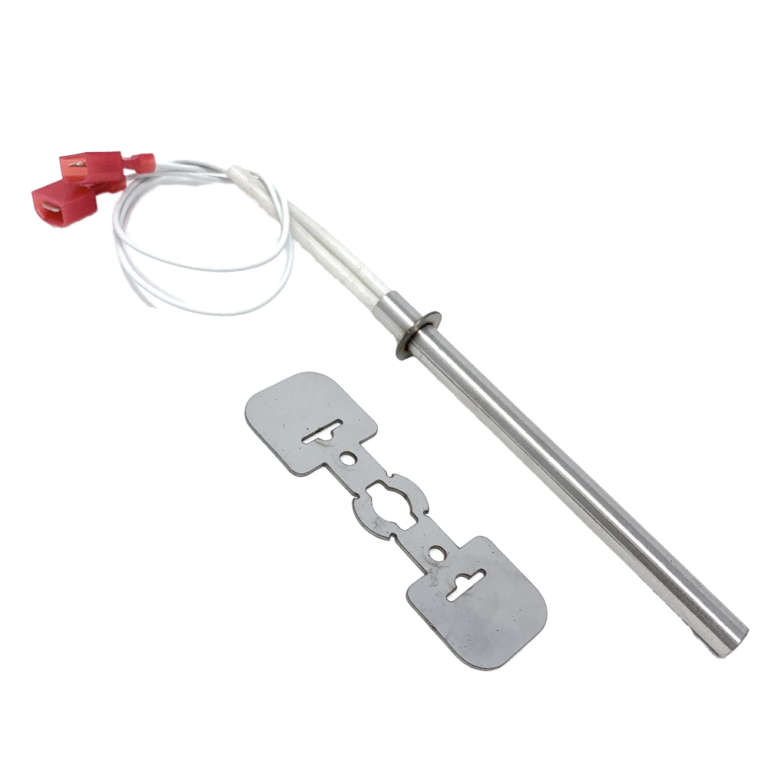
If you are using cartridge heaters or tubular heaters in a machined bore, the fit is everything. An air gap of just 0.005″ creates a massive thermal barrier. In actual deployment, we always suggest using a specialized heat transfer paste and ensuring the bore is machined to a tight tolerance. Any air trapped between the element and the hole will cause “localized hot spots,” leading to sheath rupture within weeks.
4. Protecting Terminals from Oxidation and Moisture
While the heating element itself is rugged, the electrical connection is vulnerable. In humid or corrosive environments, terminal oxidation increases resistance, which generates heat right at the connection point. This can melt the lead wires and short the circuit. 在裕陵, we use high-purity Magnesium Oxide (氧化镁) insulation and epoxy seals to prevent moisture ingress. We recommend inspecting connections monthly and using heat-shrink tubing or ceramic beads to protect the leads.
5. Supplier Audit Checklist: 3 Documents to Request Before Buying
To ensure you’re getting a long-life heater, ask your supplier for these records:
- 绝缘电阻 (IR) Test Report: Proves the MgO purity is sufficient to prevent leakage current at high temperatures.
- Dielectric Strength (Hi-Pot) Verification: Ensures the internal insulation can handle voltage surges without arcing.
- X-Ray Inspection (for critical bends): Confirms the internal heating wire hasn’t been thinned or moved during the bending process.
Frequently Asked Questions (常问问题)
问: Does frequent cycling reduce heater life?
是的. Rapid thermal cycling (on/off) causes the metal to expand and contract, leading to fatigue. We recommend using an SCR (Silicon Controlled Rectifier) power controller for smooth, steady heat instead of a standard magnetic contactor.
问: Can I use a water heater in oil to save cost?
Never. Water heaters have high watt densities designed for water’s high heat transfer. In oil, they will char the fluid and burn out almost instantly due to oil’s lower thermal conductivity.
For official safety guidelines, refer to the National Electrical Code (NEC) Section 427.