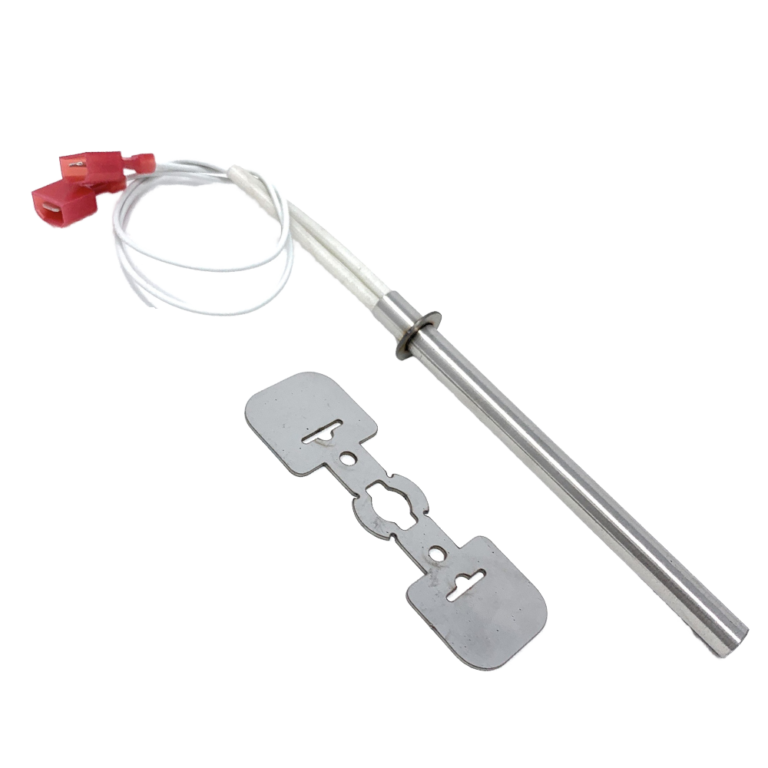
När ett elfordon möter omgivningsförhållanden under noll, litiumjoncellskemi upplever hög intern resistans, försämrad utsläppskapacitet, och allvarliga risker för litiumplätering under laddning. Snabb, enhetlig uppvärmning är ingen extralyx utan ett grundläggande krav för batteritid, fordons räckvidd, och snabbladdningskapacitet. Detta EV-batterivärmare guide ger fordonsteknik- och inköpsteam en praktisk utvärderingsram som täcker uppvärmningsarkitekturer, flödesdynamik, dielektrisk isolering, och leverantörsvalidering.
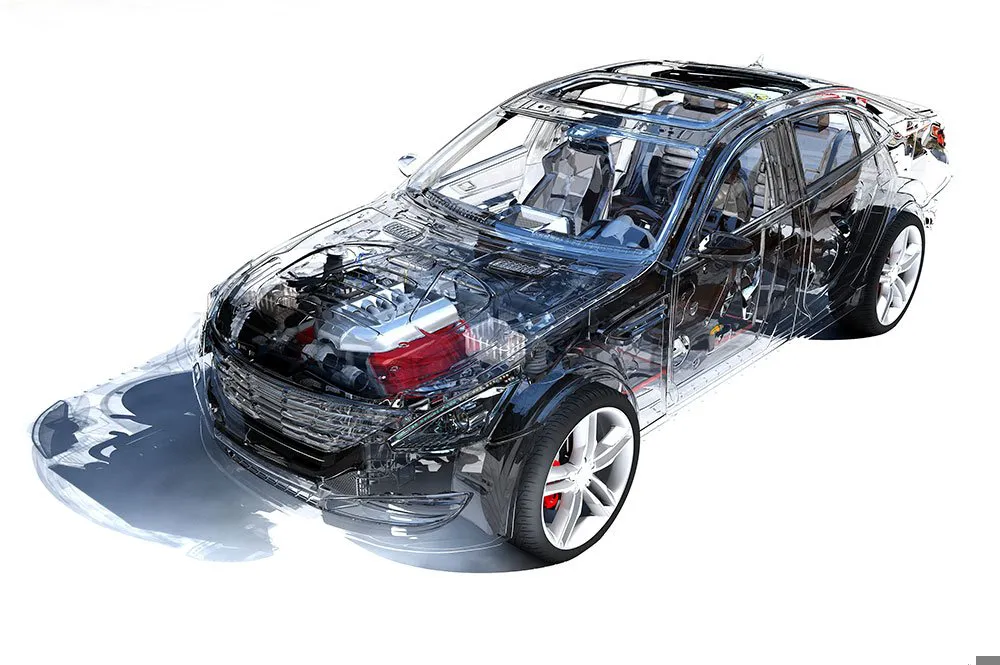
Vad driver behovet av EV Battery Thermal Management-värmare?
Litiumjonceller arbetar inom ett strikt termiskt fönster mellan 15°C och 35°C för optimal effektivitet, långt liv, och avgiftsacceptans. Under 0°C, jonledningsförmågan i flytande elektrolyter sjunker avsevärt, causing substantial power loss and preventing regenerative braking recovery.
Attempting high-power fast charging on a frozen battery pack without preheating risks permanent damage from metallic lithium deposition on the graphite anode. Modern EV platforms integrate dedicated EV battery thermal management heaters into their cooling circuits to elevate cell temperatures rapidly before charging initiates.
In our manufacturing and engineering practice, automotive OEM clients require heating systems that deliver high thermal response without localized hot spots. A well-designed heating solution prevents cell-to-cell temperature gradients from exceeding 3°C across the entire module assembly.
How Do Coolant Loop Heaters Compare to Direct Module Heating?
Termiska system för fordon använder i första hand två distinkta uppvärmningsstrategier: indirekt vätskeslingavärmare och direkt utanpåliggande värmeelement. Kylvätskeslingsystem cirkulerar en uppvärmd vatten-glykolblandning genom kalla plattor placerade under eller mellan batterimoduler.
Vätskeslingsystem erbjuder överlägsen temperaturlikformighet och integreras sömlöst med befintliga flervägsventilkretsar, kabinvärmepumpar, och kraftelektronikkylning. Dock, de inför vätskemotstånd, pumpens energiförbrukning, och termisk massa fördröjningar under initiala startsekvenser.
Direkta värmeelement, såsom silikongummi eller polyimidfolievärmare, applicera värme direkt på cellytor eller modulhöljesväggar. Medan direkt uppvärmning erbjuder omedelbar lokal värmeöverföring, scaling it across high-voltage large-capacity commercial packs increases wiring complexity and sensor count.
When selecting EV battery thermal management heaters, vehicle packaging, system voltage, and serviceability dictate whether an inline coolant heater or direct contact approach provides lower total life-cycle cost. Evaluating these trade-offs early in pack design prevents costly packaging revisions and ensures dependable thermal performance across extreme climate conditions.
Why Is Watt Density and Flow Velocity Critical in Battery Coolant Loops?
In an inline coolant heating assembly, fluid flow velocity across the element sheath directly dictates convective heat transfer efficiency. If the fluid circulation rate drops while heating power remains constant, localized fluid boiling and ethylene glycol degradation can occur rapidly.
Controlling surface watt density prevents thermal stress on heating element sheaths and ensures stable fluid film coefficients. In commercial vehicle battery loops operating at 400V to 800V architectures, maintaining sheath surface load within verified safe boundaries prevents premature element burnout.
Our engineering team performs rigorous flow modeling and boundary calculations for custom industrial heating systems. Applying verified calculations for EV battery thermal management heaters ensures that element surface temperatures stay well below glycol thermal breakdown thresholds during all operational modes.
How Do Automotive Dielectric and Vibration Standards Affect Heater Reliability?
Electric vehicle operating environments subject electrical components to continuous dynamic mechanical vibration, thermal shock cycles, and humidity ingress. High-voltage battery systems demand robust dielectric insulation to prevent insulation breakdown between active resistance circuits and grounded vehicle chassis.
High-purity compacted magnesium oxide (MgO) insulation and precision-welded terminal seals are essential to maintain high insulation resistance over vehicle operating lifetimes. Terminal connections must endure ISO 16750-3 vibration profiles without micro-cracking, contact resistance drift, or moisture penetration.
Hos Vannorm, vår 40+ years of electrical heating manufacturing expertise backed by ISO9001 and international quality certifications ensures robust product performance. Every heating element undergoes high-voltage withstand testing, leakage current verification, and hermetic seal validation prior to shipment.
How Do Different Heating Architectures Compare in Battery Packs?
| Evaluation Metric | High-Voltage Coolant Loop Heaters | Direct Surface Heating Mats | Integrated Heat Pump PTC Heaters |
|---|---|---|---|
| Thermal Uniformity | High across full pack via cold plates | Måttlig, localized to element zones | Hög, shared with cabin HVAC circuit |
| System Packaging | Compact central unit in chassis loop | Distributed across all modules | Centralized, higher plumbing complexity |
| Cold-Start Speed | Moderate due to fluid circuit mass | Rapid direct conduction to cell walls | Snabb, dependent on ambient air temp |
| Maintenance Access | External unit, easily serviceable | Internal to pack, non-serviceable | External cabin/chassis compartment |
| Voltage Compatibility | 400V to 800V high-voltage platforms | Usually 12V to 48V low-voltage sub-bus | 400V to 800V powertrain rail |
For official compliance and testing protocols regarding electric vehicle battery safety and thermal validation, review the regulatory frameworks from UL Solutions. Compliance with international standards ensures that thermal components withstand severe operational and environmental stresses.
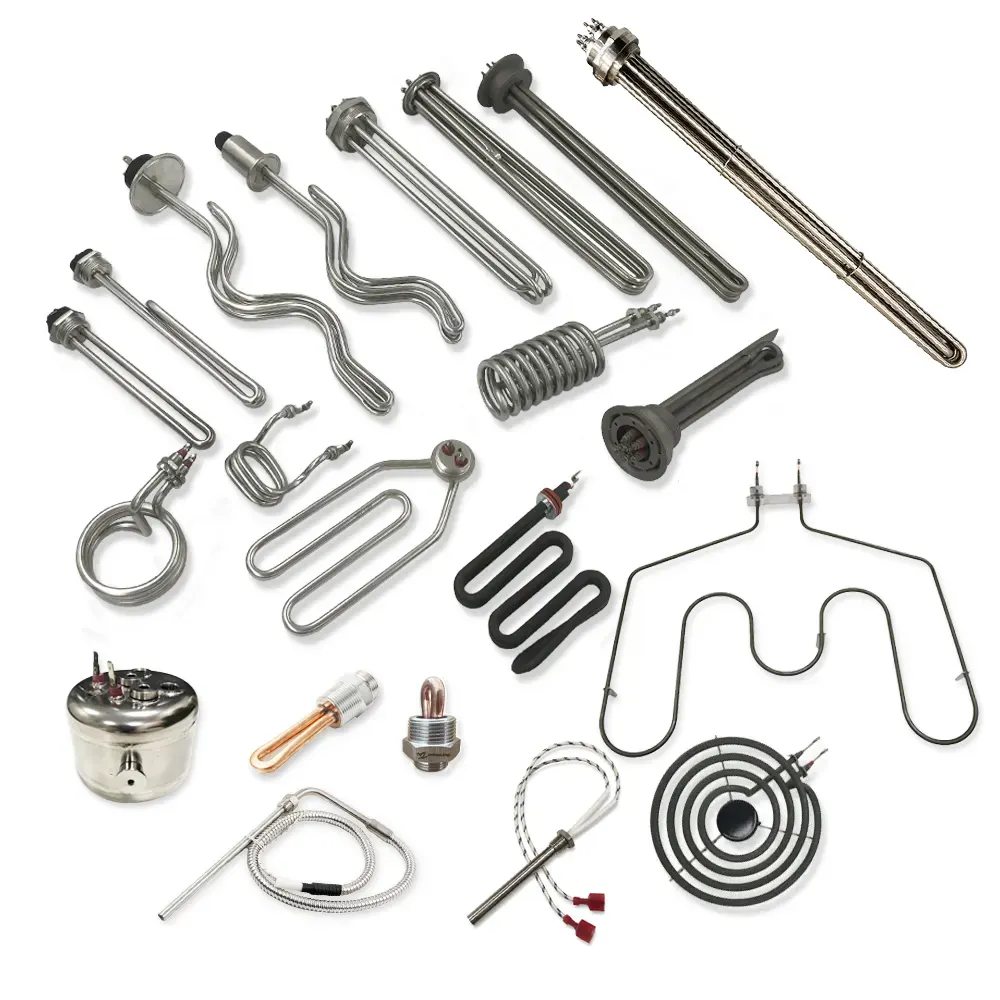
To explore related thermal calculations and manufacturing processes, granska vår guide för beräkning av wattdensitet, vår finned tubular heaters for HVAC guide, och vår anpassad OEM-tillverkningsprocess för värmeelement. Understanding core thermal dynamics helps engineering teams specify optimal heating configurations.
Checklista för leverantörsrevision: 5 Dokument att begära innan du undertecknar en inköpsorder
- Dielectric Withstand and Insulation Resistance Test Certificate: Verification of high-voltage dielectric isolation under high-temperature and damp-heat aging conditions.
- Thermal Shock and Vibration Test Report: Laboratory validation demonstrating compliance with automotive shock, random vibration, and cyclic thermal endurance profiles.
- Watt Density and Fluid Compatibility Analysis: Engineering data confirming sheath surface load limits, heat dissipation curves, and material resistance to ethylene glycol mixtures.
- Ingress Protection and Hermetic Seal Validation: Test evidence proving terminal enclosure sealing against moisture, salt spray, and atmospheric pressure changes.
- Automotive Quality Management Documentation: Production control plans, traceability records, and dimensional inspection reports confirming compliance with OEM engineering drawings.
Evaluating EV battery thermal management heaters requires technical scrutiny beyond catalog electrical ratings. Requesting verified test data ensures your battery pack thermal system delivers consistent preheating performance throughout severe winter operating conditions.
Vanliga frågor
Q: Why is preheating necessary before DC fast charging in cold weather?
Charging lithium-ion cells at low temperatures causes rapid lithium plating on the negative electrode, leading to permanent capacity loss and internal short-circuit hazards. Preheating elevates cell temperatures into safe electrochemical windows where fast lithium-ion intercalation occurs without degradation.
Q: How do engineers prevent hot spots when using EV battery thermal management heaters?
Engineers combine optimized coolant flow channel routing with precise watt density control and closed-loop temperature sensing. Hos Vannorm, we engineer heating elements with uniform resistance distribution and balanced sheath geometry to ensure homogeneous thermal dissipation across circulating coolant streams.
Q: What voltage ranges are supported for custom automotive heating elements?
Custom heating solutions can be designed for 12V/24V/48V auxiliary systems as well as 400V, 600V, and 800V high-voltage traction battery architectures. Voltage ratings dictate dielectric insulation thickness, creepage distance requirements, and terminal connection geometry.
Q: What technical specifications should be provided for an OEM heating element inquiry?
Specify target operating voltage, required heating power in kilowatts, coolant flow rate, fluid composition, maximum allowable pressure drop, operating temperature envelope, and mechanical envelope constraints. This enables our engineering team to develop a fully optimized heating design.
For custom engineering support on EV battery thermal management heaters, share your system voltage, coolant flow rate, thermal envelope, and mechanical mounting specifications with our engineering team. We will review your application requirements to deliver an optimized heating solution for your platform.