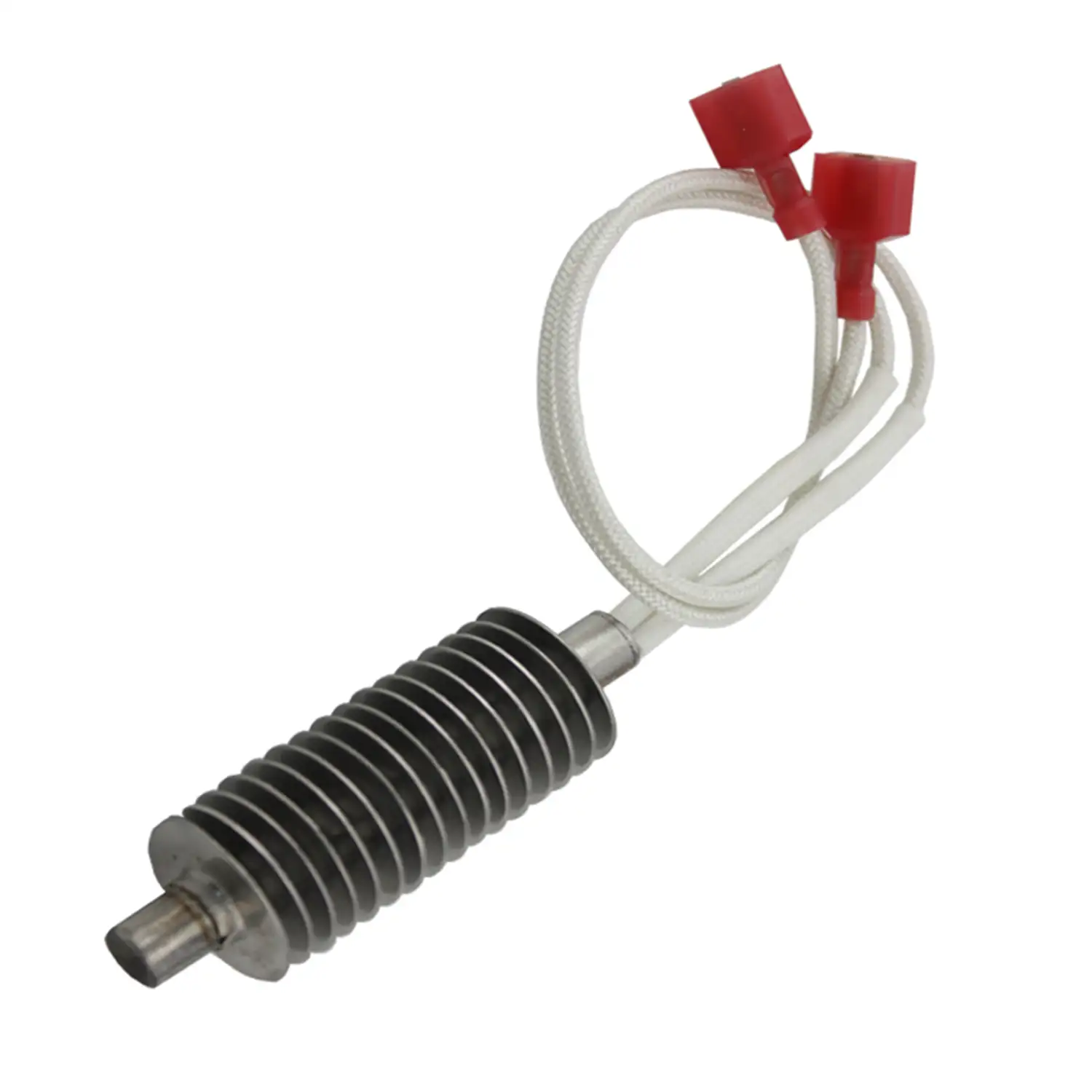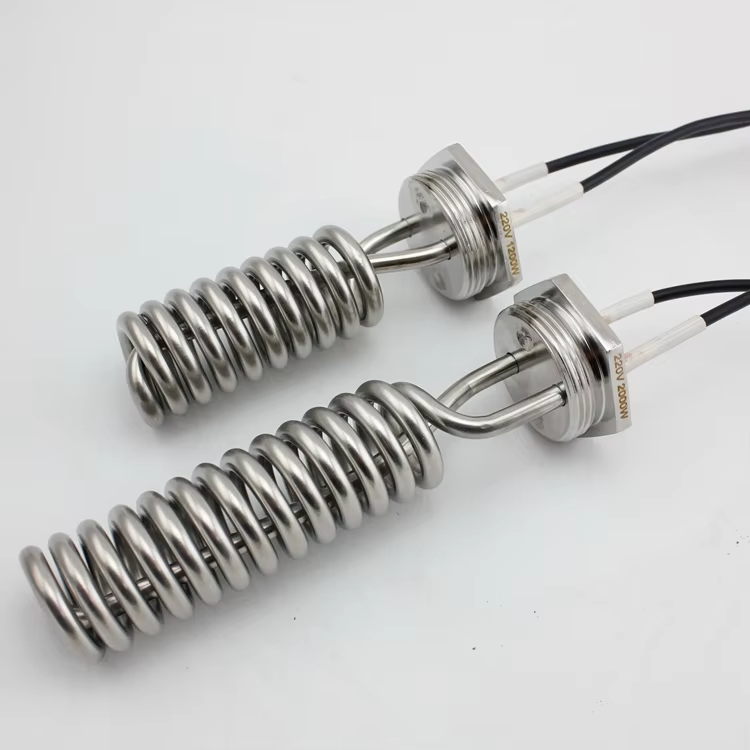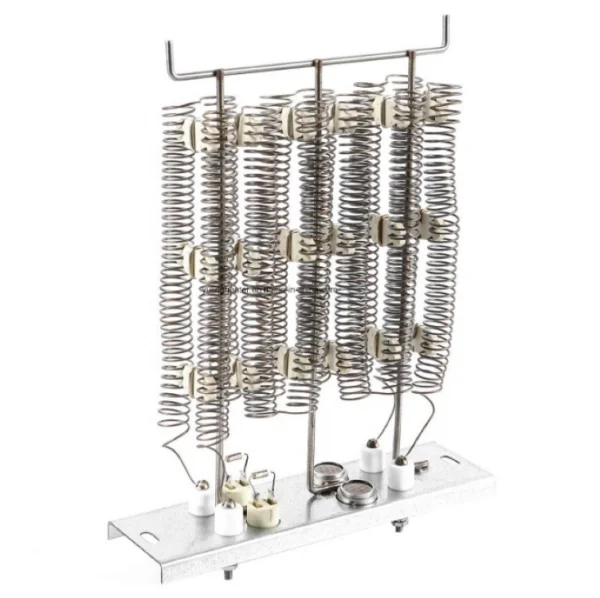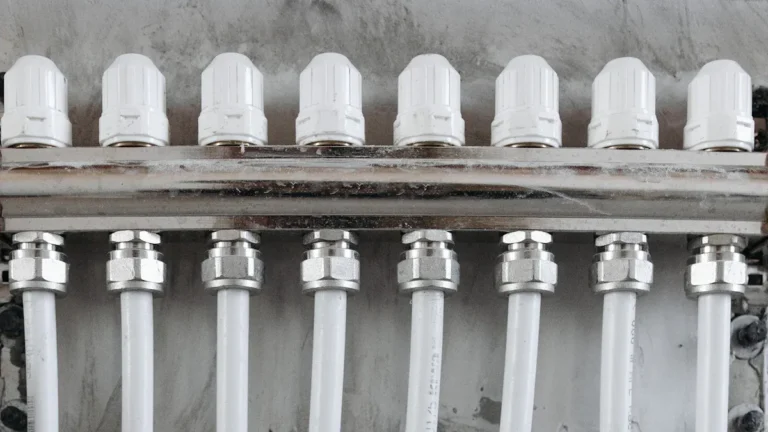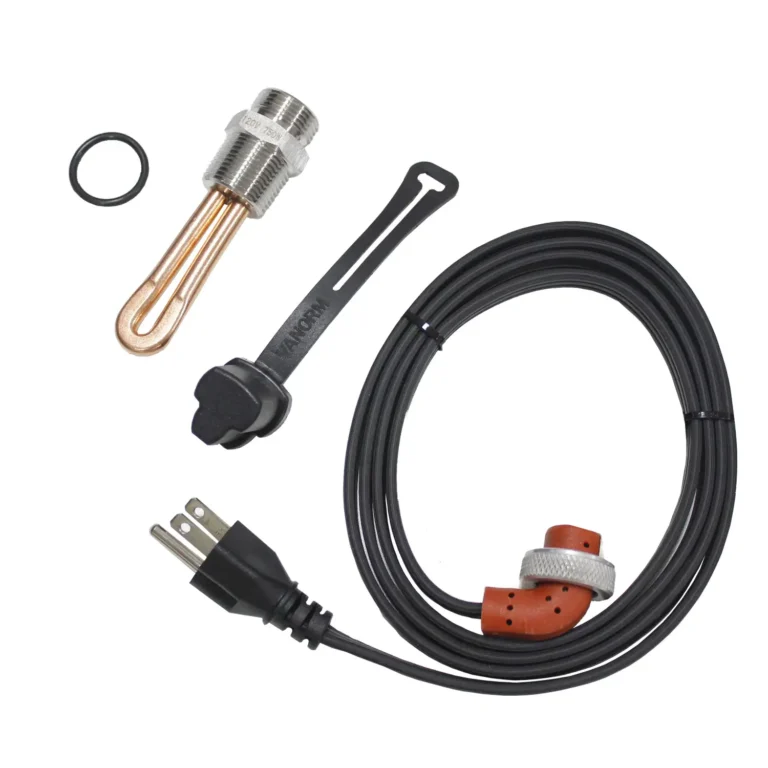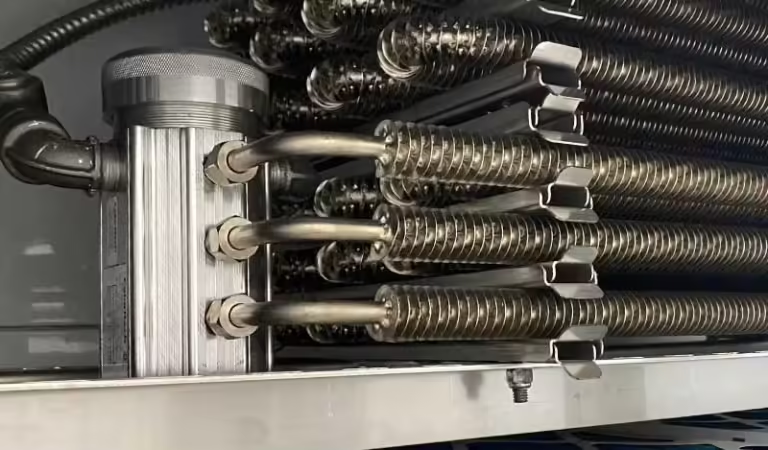
Your injection molding line is down again. The grelniki kartuš in the manifold failed—third replacement this quarter. You check the fit: 0.005″ clearance. You check the watt density: 85 W/in² in a stagnant air pocket. You check the voltage: running a 220V heater on 240V. None of these were flagged by the catalog supplier who sold you the replacements six weeks ago.
Cartridge heater failures are rarely random. In most industrial settings, they trace back to one of four preventable causes—and a supplier who didn’t ask the right questions before shipping your order. This guide breaks down each failure factor and explains how proper specification and custom manufacturing can extend heater life from months to years.
1. Why Cartridge Heaters Fail: The 4 Root Causes
Cartridge heaters operate under extreme conditions: high watt densities packed into tight bore diameters, often cycling between ambient and 800°F+ multiple times per shift. When they fail early, the cause almost always falls into one of these four categories:
- Loose bore fit. A gap larger than 0.002″ between the heater sheath and the bore wall creates an insulating air pocket. Heat cannot transfer efficiently. The sheath overheats. The resistance coil burns out.
- Excessive watt density. Running 80+ W/in² in a poorly conductive medium pushes the internal coil temperature past the oxidation threshold of the resistance wire.
- Mismatched voltage. A heater rated for 220V run at 240V draws 19% more power than designed—well past the safety margin of a high-density cartridge.
- Wrong sheath material for the environment. 304 stainless steel in a mildly acidic process environment corrodes within months. Incoloy would have lasted.
Each of these is preventable before production—if the manufacturer asks the right questions. Let’s walk through how to address each factor. (For a broader overview of heating element fundamentals, see our guide to the three main types of electric heating elements.)
2. Factor 1: Fit Tolerance—Why a 0.002″ Gap Destroys Your Cartridge Heater
Cartridge heaters transfer heat through direct contact with the bore wall. When a 0.500″ diameter heater is dropped into a 0.505″ bore, the 0.005″ air gap acts as thermal insulation—air has roughly 1/1,000th the thermal conductivity of steel. The heater sheath must run significantly hotter to push the same wattage through that gap, and the internal resistance coil operates far above its rated temperature.
The industry standard for high-density cartridge heaters is a bore clearance of 0.002″ or less. This requires:
- A precisely reamed bore with a consistent diameter along its full length
- A heater manufactured to tight OD tolerance (typically ±0.002″ for diameters under 0.500″)
- No burrs, scoring, or taper in the bore that creates uneven contact
If your application requires a non-standard diameter—say 0.437″ or 11.5mm—a catalog supplier with a limited size range will sell you the closest stock size and let you live with the gap. A custom cartridge heater manufacturer can produce to your exact bore dimension, including metric diameters for European equipment, ensuring the 0.002″ fit from day one.
3. Factor 2: Watt Density—Matching Heat Output to Your Medium
Watt density—watts per square inch of sheath surface area—is the single most mis-specified parameter in cartridge heaters. A heater rated for 60 W/in² in a tightly fitted steel bore may be perfectly safe. The same heater operating at 40 W/in² in an aluminum bore with a loose fit can fail within weeks.
The key variables that determine safe watt density:
- Bore material. Steel transfers heat better than aluminum. Copper is better than both.
- Operating temperature. As ambient temperature rises, the safe watt density drops. A heater that works at 400°F may fail at 700°F.
- Fit quality. A tight 0.001″ fit allows 15-20% higher watt density than a loose 0.004″ fit.
- Duty cycle. Continuous operation is harder on the element than cycling on/off.
According to industry data from cartridge heater failure analysis, excessive watt density for the application conditions is the second most common cause of premature failure—behind only poor bore fit. A manufacturer with engineering depth will calculate the correct watt density for your specific medium and operating temperature, rather than shipping whatever wattage you ordered without review.
4. Factor 3: Sheath Material—304 SS, 316L, ali Incoloy?
Cartridge heater sheaths are typically stainless steel, but not all stainless is equal. The material choice determines corrosion resistance, maximum operating temperature, and overall lifespan:
- 304 nerjaveče jeklo. Suitable for clean, dry environments up to 1,200°F. Cost-effective but vulnerable to chlorides and mild acids.
- 316L nerjaveče jeklo. Adds molybdenum for improved corrosion resistance. Required for food processing, medical equipment, and environments with cleaning chemicals or mild process acids.
- Incoloy 800. Nickel-iron-chromium alloy rated to 1,600°F. Essential for high-temperature applications and aggressive chemical environments. Costs more but lasts significantly longer.
A cartridge heater with the wrong sheath material for the operating environment is the fastest path to failure. If your process involves even trace chemical exposure, cleaning agents, or elevated humidity, stepping up from 304 to 316L or Incoloy is the difference between a 6-month heater and a 5-year heater. (See our comparison of tubular vs cartridge heater efficiency for more on how sheath selection affects element performance across types.)
5. Factor 4: Voltage Matching and Moisture Protection
Two additional factors that quietly destroy cartridge heaters:
Voltage mismatch. A cartridge heater designed for 220V single-phase draws 19% more current at 240V—well outside the design envelope. The wattage increases with the square of the voltage ratio: (240/220)² = 1.19× rated wattage. This overheats the coil and burns out the element. Always confirm your supply voltage at the connection point under load, not at the panel.
Moisture ingress. Cartridge heaters stored in humid environments or installed in equipment that sees washdown cycles absorb moisture into the MgO insulation. When powered up, the moisture flashes to steam, creating internal pressure that cracks the insulation and causes immediate dielectric failure. Solutions include hermetically sealed lead wire exits, silicone potting at the termination, and pre-heating stored elements before full-power operation.
6. When Off-the-Shelf Cartridge Heaters Aren’t Enough
Catalog cartridge heaters serve a purpose: standard diameters, standard lengths, standard lead configurations. But industrial applications rarely align neatly with catalog specifications. You might need:
- A 0.437″ diameter that no standard catalog carries
- A distributed wattage zone—high heat at the tip, lower along the body
- An internal thermocouple for closed-loop temperature control
- A 90° bent lead exit to clear an obstruction in the tooling
- A metric diameter for European-manufactured equipment
This is where custom cartridge heater manufacturing earns its premium. A manufacturer that supports OEM and ODM production with 40+ years of experience doesn’t just accept your drawing—they review your application and suggest improvements before cutting metal. That pre-production engineering review catches the fit tolerance issue, the watt density mismatch, or the sheath material concern before the heater is built.
7. How to Specify a Custom Cartridge Heater
When requesting a quote for custom cartridge heaters, having these details ready ensures an accurate specification and avoids back-and-forth:
- Diameter and length. Exact bore ID and depth—measure with a bore gauge, not calipers
- Moč in napetost. Required heat output and available supply voltage at the connection point
- Operating temperature. The temperature the sheath will see, not just the process setpoint
- Bore material. Jeklo, aluminum, baker, or other—affects heat transfer rate
- Environment. Any chemical exposure, moisture, washdown, or vibration
- Lead configuration. Straight, bent, armored, or with a connector
- Drawing or sample. If replacing a failed heater, send the old one for reverse engineering
For facility managers tired of swapping failed heaters mid-shift, investing in a properly specified custom cartridge heater that lasts 3–5 years provides a lower total cost of ownership than repeatedly purchasing catalog heaters that burn out every 6 months. For more on evaluating heating element suppliers, read our guide on choosing industrial heating elements manufacturers.
If you’re dealing with recurring cartridge heater failures or need custom configurations for injection molding, die heating, or OEM equipment, we’ve been designing and manufacturing heating solutions for over 40 leta. Send us your bore dimensions, application details, or a failed heater sample—we’ll provide an engineered recommendation built to fit.