Wstęp
This article offers an in-depth exploration of heating elements. Zagłębiając się w następujące aspekty, readers will gain a thorough understanding:
Spis treści
Elementy grzejne
1: Unraveling the Heating Element
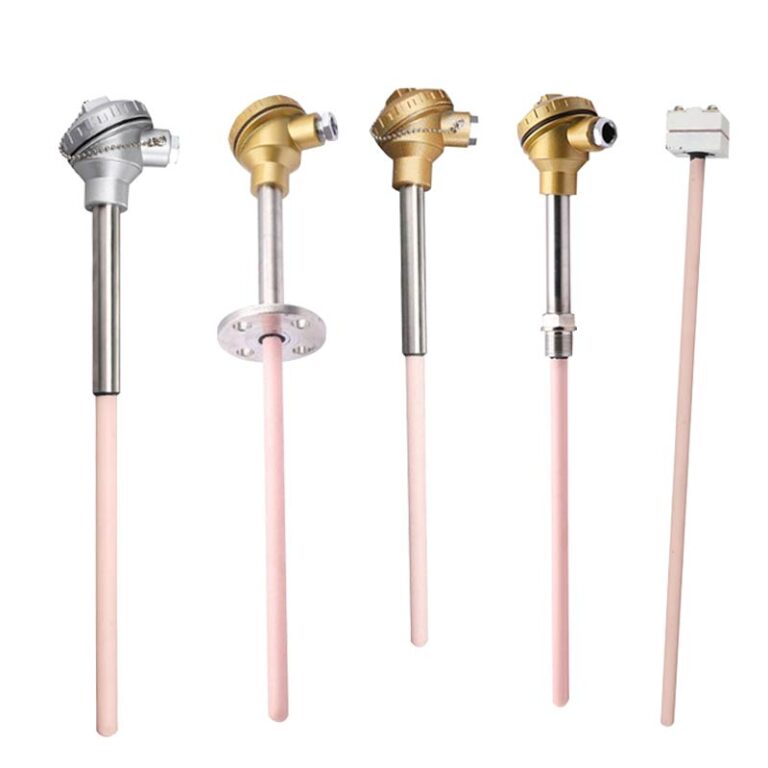
A heating element is a remarkable material or device that transforms electrical energy into heat via a process known as Joule heating. When an electric current courses through a conductor, the electrons or charge carriers collide with the atoms or ions of the conductor. These atomic-level collisions generate friction, which manifests as heat. This heat production is quantified by Joule’s first law (or Joule-Lenz law), expressed as either or ². Tutaj, the amount of heat generated hinges on the current, woltaż, and the resistance of the conductor. Resistance plays a pivotal role in designing heating elements.
Joule heating occurs to varying extents in all conductive materials, with the exception of superconductors. Materials with low electrical resistance tend to produce less heat as charge carriers flow more freely through them. Dla kontrastu, those with high resistance generate more heat. Superconductors allow electrical current to pass without any heat production. Typowo, the heat generated by conductors is regarded as an energy loss, like the unwanted heating in electrical equipment known as copper loss, which doesn’t contribute to useful work.
Electrical heating elements are highly efficient in converting electrical energy into heat, with nearly 100% of the supplied energy being transformed into thermal energy. They may also emit energy in the form of light and radiation. Jednakże, this ideal efficiency pertains mainly to resistors. Minor losses can occur due to the material’s inherent capacitance and inductance, which convert electrical energy into electric and magnetic fields respectively. Ponadto, the overall system efficiency can be affected by heat dissipation into the external environment from the process fluid or the heater itself. Zatem, for optimal utilization of the generated heat, a well-insulated heating system is essential.
2: Properties that Define Heating Elements
Nearly all conductors produce heat when an electric current passes through them, yet not all are suitable for use as heating elements. The ideal heating element material must possess a specific blend of electrical, mechaniczny, and chemical properties.
Resistivity: To generate heat, the heating element requires adequate electrical resistance. Jednakże, it shouldn’t be so high that it becomes an insulator. Electrical resistance is calculated as the resistivity multiplied by the length of the conductor divided by the conductor cross-section. For a given cross-section, a material with high resistivity is used when a shorter conductor is desired.
Oxidation Resistance: Heat generally accelerates oxidation in both metals and ceramics. Oxidation can consume the heating element, reducing its capacity or compromising its structure, thereby limiting its lifespan. For metallic heating elements, alloying with an oxide former helps form a passive layer to resist oxidation. Ceramic heating elements commonly have protective oxidation-resistant scales like SiO₂ or Al₂O₃. Some heating element types, such as graphite, are not suitable for use in oxidizing environments and are typically used in vacuum furnaces or those with non-oxidizing atmosphere gases like H₂, N₂, Ar, or He, where the heating chamber is evacuated of air.
Temperature Coefficient of Resistance: The resistivity of the material changes with temperature. In most conductors, as the temperature rises, so does the resistance. This phenomenon has a more pronounced effect on certain materials. A higher temperature coefficient of resistance is often utilized in heat-sensing applications. For heat generation, a lower value is usually preferable. Jednakże, in some cases where the change in resistance can be accurately predicted, a sharp increase in resistance can be advantageous to deliver more power. To account for the changing resistivity, control or feedback systems are employed.
Mechanical Properties: Rigid heating elements can deform when used at high temperatures. As the material approaches its molten or recrystallization phase, it weakens and deforms more easily compared to its state at room temperature. A good heating element can maintain its shape even at elevated temperatures. Dodatkowo, ductility is a desirable mechanical property, especially for metallic heating elements. It enables the material to be drawn into wires and formed into shape without sacrificing its tensile strength.
Melting Point: Besides the temperature at which oxidation significantly increases, the material’s melting point also restricts its operating temperature. Ceramics generally have higher melting points than metallic heaters.
Leading Heating Element Manufacturers and Companies include Backer Hotwatt, Inc., Ulanet™, Hi-Heat Industries, Inc., Tutco-Farnam, and National Element, Inc. (You can mouse over the company names to see their previews.)
3: Materials Used in Heating Elements
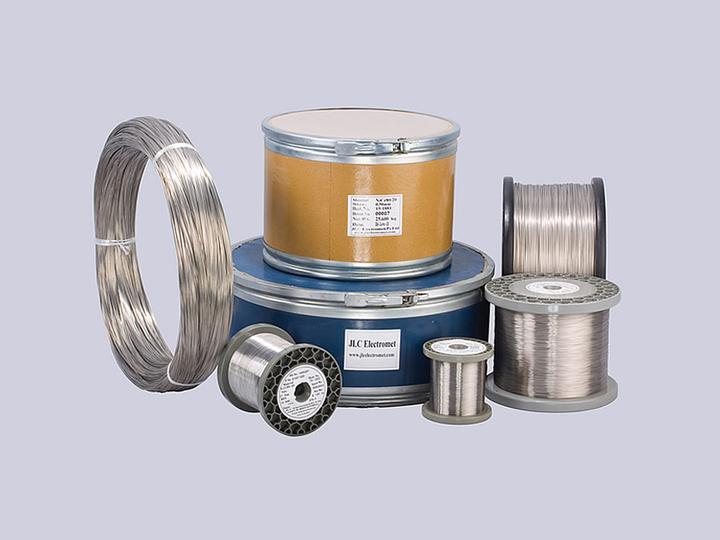
The material properties discussed earlier narrow down the selection to several key materials.
Nickel-Chromium (Ni-Cr) Stop: Among the most commonly used materials for heating elements, nickel-chromium alloys are prized for their ductility, high resistivity, and resistance to oxidation even at elevated temperatures. Typically composed of 80% nickel and 20% chromium (though other compositions may be available from different manufacturers), these alloys are often formed into wires for use as heating elements, such as in hot-wire foam cutters. They can reach maximum heating temperatures of approximately 1,100 to 1,200°C.
Iron-Chromium-Aluminum (Fe-Cr-Al) Stop: Often known by the trademark Kanthal, ferritic iron-chromium-aluminum alloys usually consist of 20 Do 24% chromium, 4 Do 6% aluminium, with iron making up the remainder. These alloys are favored for their pliability and lower density compared to nickel-chromium alloys. They can achieve higher temperatures, reaching around 1,300 to 1,400°C. Although they tend to be less expensive due to the lower price volatility of iron compared to nickel, they have reduced strength at elevated temperatures compared to nickel-chromium alloys. They can be enhanced through powder metallurgy, where the alloy ingot is ground into a powder, compressed into a die, and sintered or hot-pressed in a controlled atmosphere. Dispersoids are added to improve mechanical properties, increasing strength and toughness at higher temperatures.
Dwukrzemek molibdenu (MoSi₂): A refractory cermet (a ceramic-metallic composite), molybdenum disilicide is predominantly used as a heating element material. It is well-suited for high-temperature furnaces due to its high melting point and excellent corrosion resistance. MoSi₂ heating elements are manufactured through various energy-intensive methods, including mechanical alloying, combustion synthesis, shock synthesis, and hot isostatic pressing. They can reach temperatures up to 1,900°C. Jednakże, they have drawbacks such as low toughness at ambient temperatures and susceptibility to high-temperature creep. At room temperature, MoSi₂ is brittle and requires careful handling. Toughness improves significantly at its brittle-ductile transition temperature of around 1,000°C, but a higher creep rate can cause deformation at high temperatures. The most common MoSi₂ element design is the 2-shank hairpin type, which is often suspended from the furnace roof and positioned around the furnace walls. Other configurations are available and are frequently combined with ceramic insulation formers to provide both mechanical support and thermal insulation in a single package.
Węglik krzemu (SiC): Silicon carbide heating elements are made from a ceramic produced by recrystallizing or reaction bonding SiC grains at temperatures above 2,100°C. These elements are typically porous (8-25%) allowing the furnace atmosphere to interact through the material. Over time, the heating element may undergo gradual oxidation, which increases its electrical resistance in a process known as “aging.” To maintain consistent power output, a variable voltage supply is often used to incrementally raise the voltage as the element ages. This aging process eventually limits the heating element’s lifespan and performance. Silicon carbide is ideal for high-temperature applications due to several key properties. It lacks a liquid phase, meaning it doesn’t sag or deform due to creep at high temperatures, and no internal supports are necessary within the furnace. SiC sublimates directly at around 2,700°C, making it suitable for extreme conditions. Dodatkowo, it is chemically inert to most process fluids, has high rigidity, and a low coefficient of thermal expansion. Silicon carbide heaters can achieve temperatures of approximately 1,600 to 1,700°C.
Graphite: Graphite, a mineral with a hexagonal atomic structure composed of carbon, is an excellent conductor of both heat and electricity. It can generate heat at temperatures exceeding 2,000°C. At high temperatures, its electrical resistance increases significantly. It also withstands thermal shocks well and remains resilient without becoming brittle during rapid heating and cooling cycles. Jednakże, graphite has a notable drawback: it tends to oxidize at around 500°C, leading to material degradation with prolonged exposure. Więc, graphite heating elements are predominantly used in vacuum furnaces, where oxygen and other gases are removed from the heating chamber to prevent oxidation of both the molten metals and the heating element itself.
Molybdenum, Tungsten, and Tantalum: Refractory metals like tungsten and molybdenum exhibit properties similar to graphite when used as heating elements. Among these metals, tungsten can operate at the highest temperatures but is also the most expensive. Molybdenum, while less costly and more commonly used, is still more expensive than graphite. Like graphite, these metals must be used in vacuum conditions because they have a strong affinity for oxygen, hydrogen, and nitrogen. They begin to oxidize at temperatures between 300 to 500°C.
Positive Thermal Coefficient (PTC) Przybory: Typical PTC materials include rubber and ceramics. PTC rubber is commonly made from polydimethylsiloxane (PDMS) infused with carbon nanoparticles. PTC heaters are distinguished by their ability to regulate current flow through an increase in electrical resistance as temperature rises. This characteristic makes them safe and suitable for applications such as clothing. Initially, the heater draws full power and heats up due to its resistivity. As the temperature increases, the material’s resistance grows, eventually acting as an insulator. This self-regulation occurs without the need for an external feedback loop.
4: Rodzaje elementów grzewczych
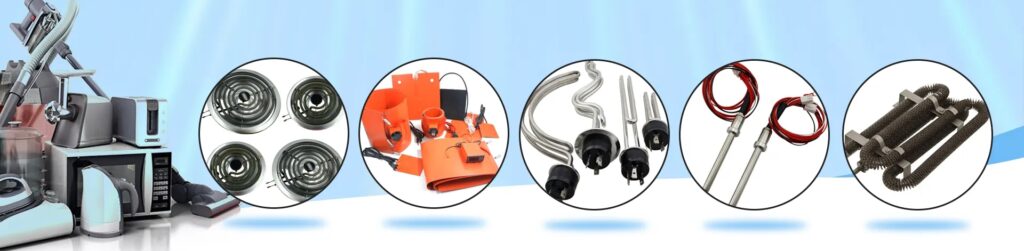
A heating system encompasses more than just the heating element. It also includes terminations, leads, izolacja, uszczelka, sheath, and seals. Heaters come in diverse forms and configurations to meet specific application needs.
Air Process Heaters: As the name implies, these heaters are used to heat flowing air. They consist of a heated tube or pipe, with one end for introducing cold air and the other end as the hot air exit. Coils of heating elements, insulated by ceramics and non-conducting gaskets, are placed along the walls of the pipe. They are typically used in high-flow, low-pressure applications such as heat shrinking, laminating, adhesive activation or curing, wysuszenie, baking, itp.
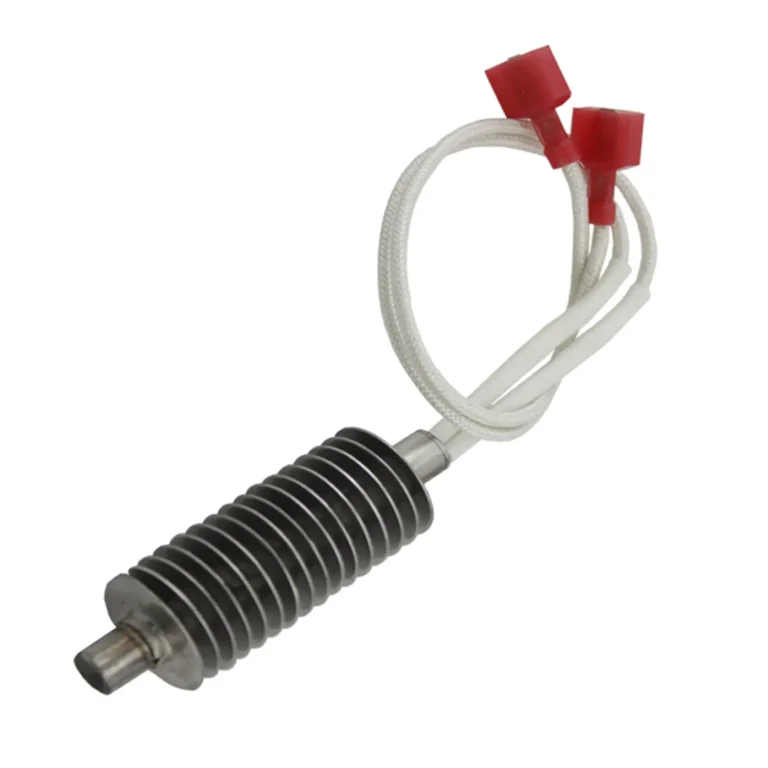
Grzeźby kasetowe: In this type, the resistance wire is coiled around a ceramic core, usually made of compacted magnesium oxide. Rectangular configurations are also available where the resistance wire coils pass three to five times along the length of the cartridge. The resistance wire or heating element is positioned near the walls of the sheathing material for maximum heat transfer. The sheath is usually made of corrosion-resistant materials like stainless steel to protect the internals. The leads are usually flexible, with both terminations located on one end of the cartridge. Cartridge heaters are used in die or mold heating, fluid heating (grzejniki zanurzeniowe), and surface heating.
Grzejniki rurowe: The internals of tubular heaters are similar to those of cartridge heaters. The main difference is that the lead terminals are on the opposite ends of the tube. The whole tubular construction can be bent into different forms to suit the heat distribution required by the space or surface to be heated. They can also feature fins that are mechanically bonded onto the sheath surface to aid in effective heat transfer. Tubular heaters are as versatile as cartridge heaters and are used in similar applications.
Band Heaters: Designed to wrap around cylindrical metal surfaces or containers such as pipes, beczki, drums, wytłaczarki, itp., band heaters feature bolted locking tabs to securely clamp onto the surface of the container. Inside the band, the heater is a thin resistance wire or ribbon typically insulated by a mica layer. The sheathing is made of stainless steel or brass. An advantage of band heaters is that they indirectly heat the fluid inside the vessel, preventing the heater from being subjected to chemical attack from the process fluid and also preventing possible ignition when used for oil and lubricant service.
Strip Heaters: These heaters are flat and rectangular in form and are bolted onto the surface to be heated. Their internals are similar to band heaters, but the insulating material, aside from mica, can be ceramics such as magnesium oxide and fiberglass. They are typically used for surface heating of dies, formy, talerze, czołgi, kanały, itp. They can also be used for air or fluid heating by having finned surfaces. Finned strip heaters are seen in ovens and space heaters.
Etched Foil Heaters: Also known as thin-film heaters, etched foil heaters have the resistive heating material etched and bonded onto a foil, usually made of aluminum. If more flexibility and tear resistance is required, the substrate can also be made of heat-resisting synthetic rubber or thermoplastic polyurethane (TPU). The tight spacing of the heating elements, an advantage of photochemical etching, enables even heat distribution with a larger heat density in small forms. Their applications are more specialized compared to conventional wire heaters and are usually seen in medical devices, electronics and instrumentation, lotniczy, and clothing. One side can be lined with an adhesive layer for easy mounting.
Ceramic Heaters: These heaters use ceramics with high melting point, high thermal stability, high-temperature strength, high relative chemical inertness, and small heat capacity. Note that these are different from ceramics used as an insulating material. Due to their good thermal conducting properties, służą do przewodzenia i rozprowadzania ciepła z elementu grzejnego. Godnymi uwagi grzejnikami ceramicznymi są azotek krzemu i azotek aluminium. Są powszechnie używane do szybkiego nagrzewania, jak widać na świecach żarowych i zapalnikach. Jednakże, poddawane szybkim cyklom ogrzewania i chłodzenia w wysokiej temperaturze, materiał jest podatny na pękanie w wyniku zmęczenia spowodowanego naprężeniami termicznymi. Specjalnym typem grzejników ceramicznych jest ceramika PTC, który może samoregulować zużycie energii, aby zapobiec nagrzaniu się do czerwoności.
Grzejniki z włókna ceramicznego: W tego typu grzejnikach, włókno ceramiczne służy jako izolator, który koncentruje ciepło na ogrzewanej powierzchni, aby zapobiec stratom w systemie. Drut oporowy jest nawinięty po jednej stronie podkładki z włókna ceramicznego, i ta strona jest przyklejona do ogrzewanej powierzchni, która może osiągnąć nawet 1200°C.
5: Factors to Consider When Selecting a Heater
Chociaż elementy grzejne generalnie działają na tej samej zasadzie, na ich wydajność i żywotność wpływa kilka czynników. Kluczowe specyfikacje grzejników obejmują moc lub moc, maksymalna temperatura robocza, rodzaj płynu procesowego, materiał osłony, i zasilanie (napięcie i częstotliwość). Dodatkowo, Aby zoptymalizować wydajność, należy również wziąć pod uwagę takie czynniki, jak przepływ płynu i kontrola temperatury.
Gęstość watów: Gęstość watów to ciepło dostarczane przez element grzejny na jednostkę powierzchni. Aby w pełni wykorzystać żywotność grzejnika, należy wybrać odpowiednią gęstość watów dla konkretnego zastosowania. Dla danej mocy, zarówno grzejniki o dużej, jak i małej gęstości będą dostarczać tę samą ilość ciepła, ale w różnych temperaturach. Elementy o dużej gęstości mogą osiągać znacznie wyższe temperatury, co może skutkować przedwczesnym spaleniem lub awarią elementu. Przy wyborze elementu grzejnego, konieczne jest sprawdzenie zalecanej przez producenta gęstości watów dla konkretnego zastosowania.
Temperatura: Docelowa temperatura robocza ma bezpośredni wpływ na gęstość watów. Musi istnieć równowaga pomiędzy tymi dwoma czynnikami. W projektowaniu podgrzewacza procesowego, zazwyczaj w pierwszej kolejności określana jest temperatura, ponieważ jest to parametr procesu wymagany przez system.
Zasilanie: Element grzejny musi działać przy dostępnym zasilaniu. Sprawdź napięcie znamionowe, które zwykle wynosi 120 V lub 240 V. Przy wyborze docelowej mocy, sprawdzić wytwarzany amperaż. Należy uważać, aby nie przekroczyć punktu zadziałania wyłącznika zasilania ani wartości znamionowych kabli zasilających.
Przepływ płynu: Intuicyjnie, Płyny stojące łatwiej jest ogrzać w kontrolowanej temperaturze niż płyny płynące. Powietrze lub inne gazy na ogół nie absorbują szybko ciepła ze względu na ich małą gęstość. Aby rozwiązać ten problem, wymagane są grzejniki o dużej powierzchni. Żebrowane powierzchnie i długie cewki z drutu (elementy grzejne o małej gęstości) to typowe cechy nagrzewnic powietrza.
Lokalizacja czujnika temperatury: Konwencjonalne grzejniki są wyposażone w czujnik temperatury i sterownik. W większości zastosowań, urządzenie czujnikowe mierzy jedynie temperaturę płynu procesowego. Jednakże, zwykle nie odzwierciedla to rzeczywistej temperatury elementu grzejnego. Przed zainstalowaniem grzejnika i urządzenia do pomiaru temperatury, ważne jest, aby sprawdzić, czy jego lokalizacja jest odpowiednia dla zespołu grzewczego. Jeśli czujnik jest za daleko, odbita temperatura może być znacznie niższa ze względu na rozpraszanie ciepła i niską szybkość wymiany ciepła. Może to prowadzić do bardzo wysokich temperatur, które mogą spowodować spalenie elementu grzejnego.
Korozja: Korozja może wynikać z płynu procesowego lub środowiska zewnętrznego. Materiał osłony chroni element grzejny, leads, i izolatory przed atakiem chemicznym. Zatem, osłona musi być w stanie utrzymać swoją wytrzymałość w wysokich temperaturach, a jednocześnie być odporna na korozję. Powszechnie stosowanymi materiałami osłonowymi jest stal nierdzewna, mosiądz, miedź, i inne stopy specjalne, takie jak Monel i Incoloy. Ponadto, integralność osłony i uszczelnienia końcówki musi być wystarczająca do danego zastosowania. Do wymagających zastosowań, hermetyczne uszczelnienie jest najlepszą opcją zapewniającą całkowitą ochronę przed płynem procesowym.
Wniosek
Element grzejny to materiał lub urządzenie, które przekształca energię elektryczną w ciepło lub energię cieplną zgodnie z zasadą ogrzewania Joule'a. Do kluczowych właściwości elementu grzejnego należy wystarczająca rezystancja, wysoka odporność na utlenianie, współczynnik oporu w niskiej temperaturze, wysoka wytrzymałość, i wysoką temperaturę topnienia. Powszechnie stosowanymi elementami grzejnymi są stopy niklowo-chromowe, stop żelaza, chromu i aluminium, dwukrzemek molibdenu, i węglik krzemu, następnie grafit i inne metale ogniotrwałe o ogólnie wyższych szybkościach utleniania. Oprócz elementu grzejnego, grzejnik zawiera końcówki, leads, izolacja, uszczelka, sheath, and seals. Grzejniki te są dostępne w różnych formach i konfiguracjach, dostosowanych do konkretnych zastosowań. Typowe specyfikacje zamawiania grzejnika obejmują moc lub moc, maksymalna temperatura robocza, rodzaj płynu procesowego, materiał osłony, i zasilanie (napięcie i częstotliwość).