Kabel grzejny o stałej mocy
In the realm of heating systems, kable grzejne o stałej mocy (CWHC) are a marvel of modern technology. Te urządzenia, meticulously designed for efficiency, are a testament to the advancements in the field of thermal regulation. But how exactly does a CWHC work? Let’s delve into the heart of this ingenious invention.
The principle behind the Constant Wattage Heat Cable is fairly straightforward. As the name suggests, it maintains a constant wattage output throughout its length, irrespective of the ambient temperature. This is achieved through a resistive wire that runs the length of the cable. When an electric current is passed through this wire, it encounters resistance which, z kolei, generates heat. The beauty of this system lies in its simplicity and efficiency.
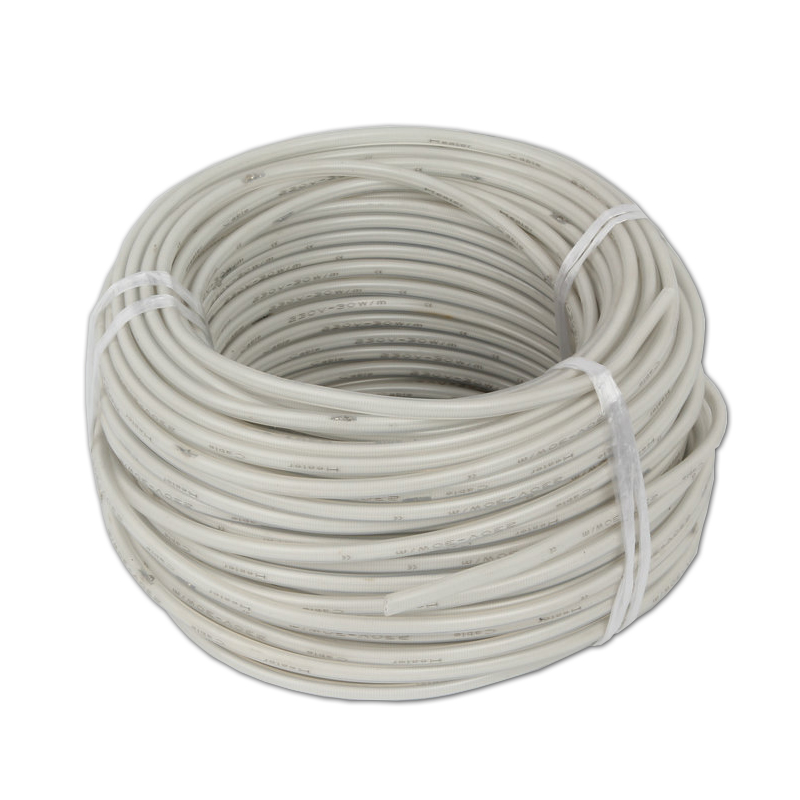
The inner workings of a Constant Wattage Heat Cable are a bit more complex. The resistive wire is typically encased within an insulating layer, which is then surrounded by a conductive sheath. This sheath serves two purposes: it acts as a ground path for safety and also helps distribute the heat evenly along the cable. The outermost layer is a protective jacket, designed to withstand harsh environments and provide durability.
Several factors affect the functioning of a CWHC. The cable’s wattage output is determined by the resistance of the wire and the applied voltage, following Ohm’s Law. The heat generated by the cable is also influenced by the ambient temperature and the thermal conductivity of the surrounding material. Dlatego, the cable’s efficiency can be optimized by carefully selecting the installation environment and voltage.
| Moc wyjściowa | 25W/M | 40W/M | 50W/M |
| Napięcie | 220V | ||
| Ołów | 0.75 Kwadrat | ||
| Materiał izolacyjny drutu | Guma silikonowa | ||
| Korpus grzewczy | Drut ze stopu Cu-Ni | Drut ze stopu Cu-Ni | Drut ze stopu NiCr |
| Izolacja zewnętrzna wężownicy grzewczej | Guma silikonowa | ||
| Korpus grzewczy | 5mm*7 mm | ||
| Użyj najdłuższego limitu | 65M | 50M | 44M |
| Odległość między węzłami | 0.5M | ||
| Napięcie wytrzymujące zanurzenie | AC3500V | Rezystancja izolacji | ≥200 minut |
Teraz, przyjrzyjmy się zastosowaniom CWHC. Kable te są szeroko stosowane w różnych konfiguracjach, od mieszkalnego po przemysłowy. Można je znaleźć w systemach odladzania dachów i rynien, zapobieganie zatorom lodowym i soplom. W branży przemysłowej, służą do utrzymywania temperatury rur i zbiorników, upewniając się, że zawartość nie zamarzła lub nie stała się zbyt lepka. Stosowane są również w systemach ogrzewania gruntowego i ogrzewania podłogowego.
Zalet CWHC jest wiele. Ich stała moc wyjściowa zapewnia niezawodne i równomierne ogrzewanie, co czyni je idealnymi do zastosowań, w których kluczowa jest stabilna temperatura. Są również łatwe w montażu i można je przyciąć na miejscu, zapewniając elastyczność w projektowaniu. Ponadto, ich solidna konstrukcja sprawia, że są trwałe i odporne na trudne warunki.
Podsumowując, the constant wattage heat cable is a versatile and efficient heating solution. Its design, based on the principle of electrical resistance, allows for consistent heat output along the entire length of the cable. Its broad range of applications, od mieszkalnego po przemysłowy, and its many advantages, such as reliability and ease of installation, make it a preferred choice in thermal regulation systems. As we continue to advance in the field of heating technology, the CWHC remains a shining example of innovation and practicality.Constant Wattage Heat Cable