You need to heat a tank, a vessel, or a flowing liquid. You search “침지 히터” 그리고 “관형 히터“—and now you’re staring at two product categories that look similar on the surface but serve fundamentally different purposes depending on your application.
Choosing the wrong type doesn’t just waste money. It can mean insufficient heat output, a heating element that corrodes in three months, or a replacement cycle that eats into your maintenance budget. This guide breaks down the real differences—not the catalog version—and explains why off-the-shelf sizing rarely matches real industrial requirements.
Immersion Heaters vs Tubular Heaters: The Core Difference
The distinction is in how the heating element interacts with the medium:
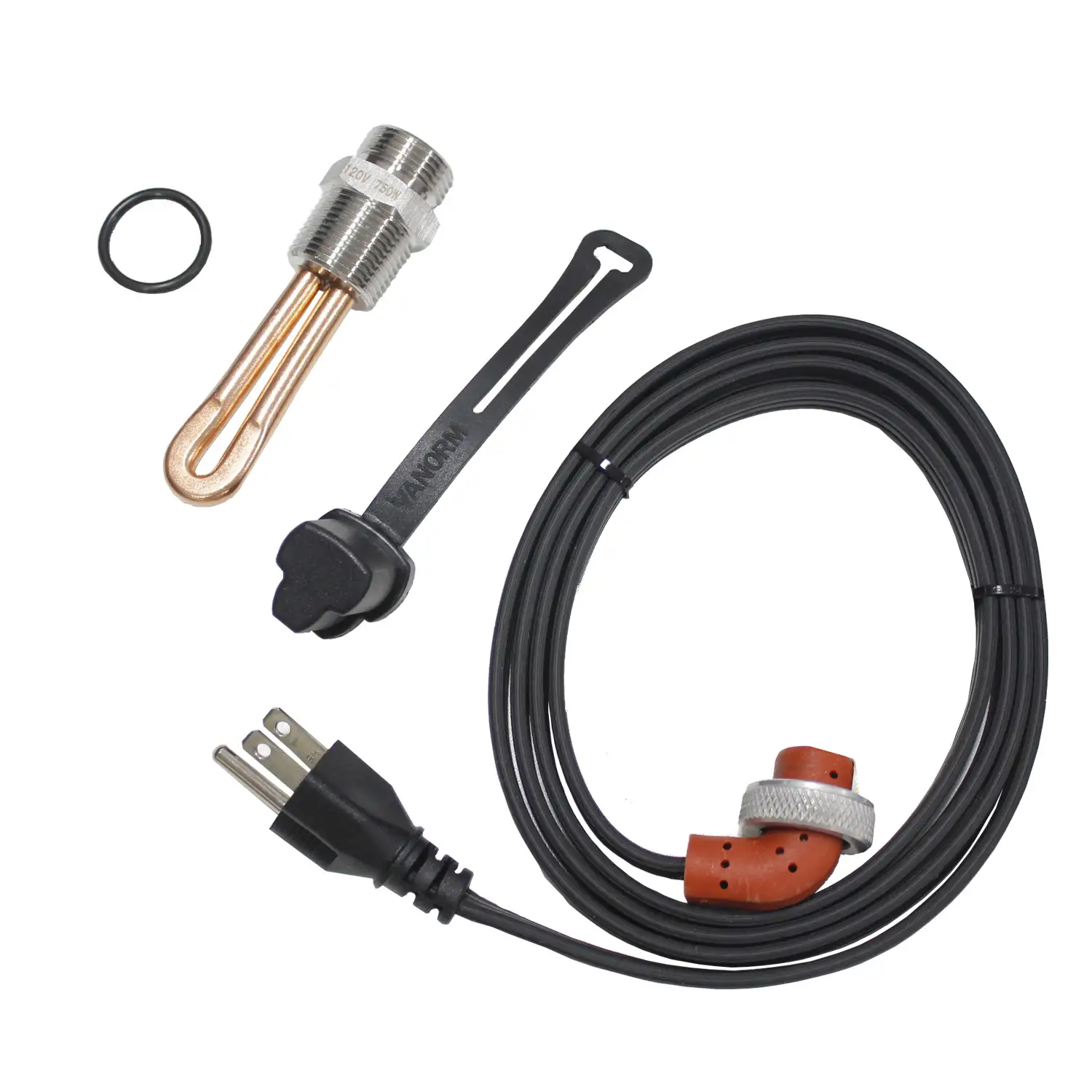
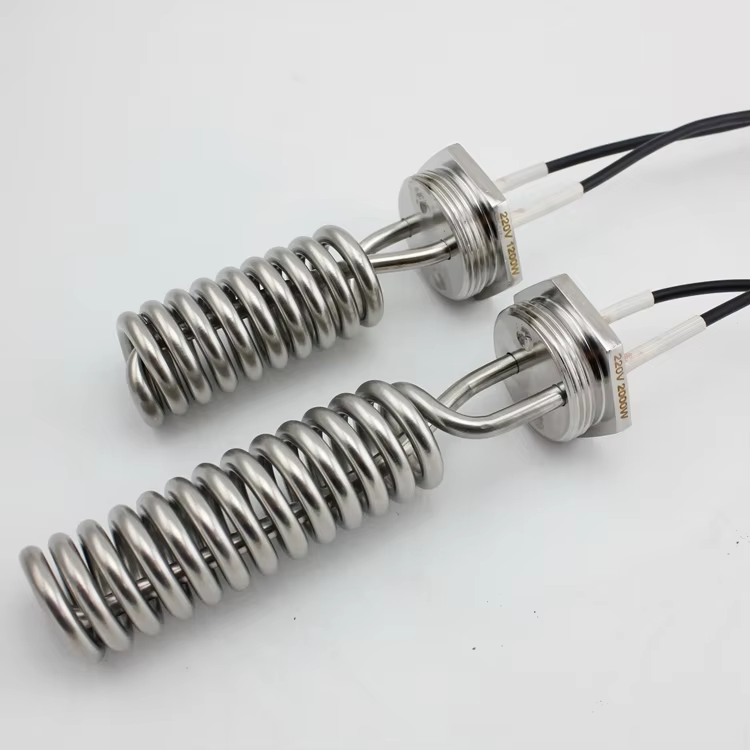
- 이머젼 히터 are designed to be inserted directly into the liquid, gas, or viscous material being heated. The entire heated section is submerged in the medium. Common forms include flanged immersion heaters (bolted to a tank flange), screw-plug immersion heaters (threaded into a port), and over-the-side immersion heaters (hung over a tank wall).
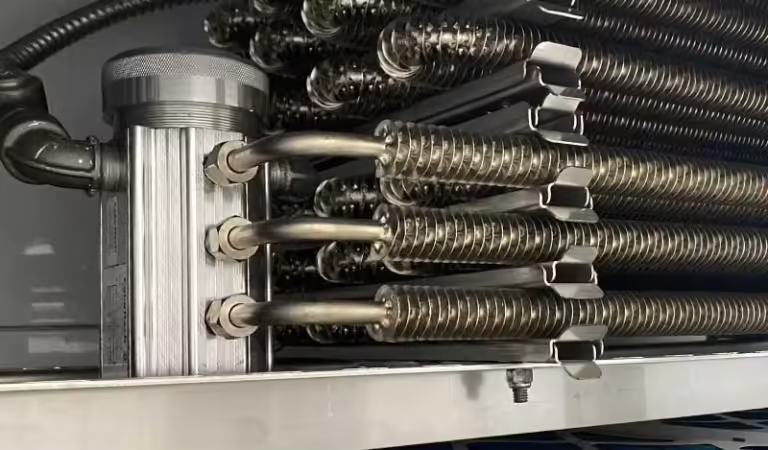
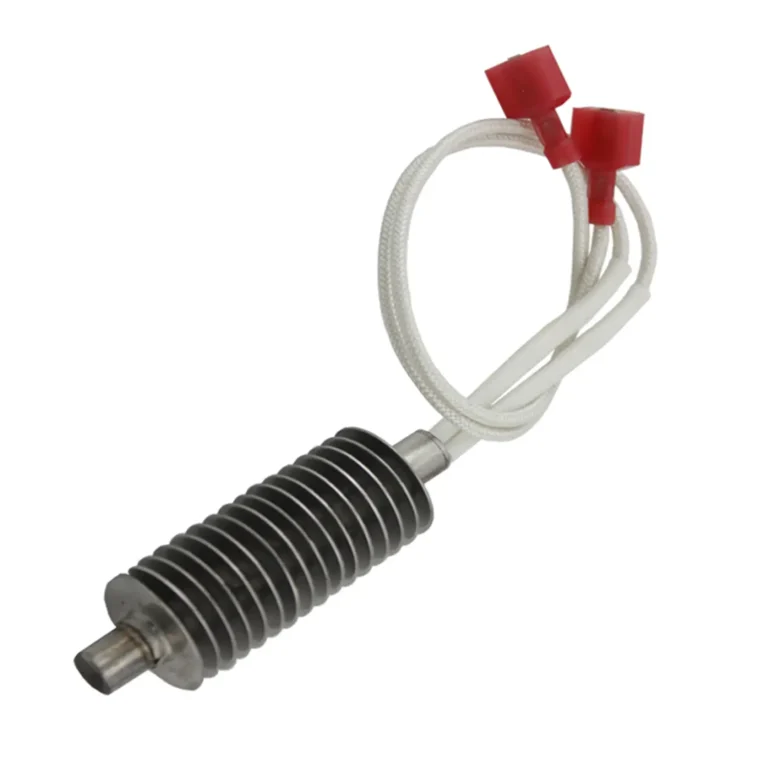
- 관형 히터 are versatile heating elements shaped from a metal tube containing a resistance coil insulated by compacted MgO powder. They can heat air, liquids, or solids depending on how they are mounted. Tubular elements are the building blocks—they can be bent into custom shapes, inserted into tanks (becoming immersion heaters), mounted in ducts (becoming air heaters), or clamped to surfaces.
Here’s the key insight: most immersion heaters are tubular heaters configured for liquid immersion. The distinction is not always in the element itself but in the mounting method, sheath material selection, and watt density calculation specific to the medium.
When to Choose an Immersion Heater
Immersion heaters are the right call when your primary need is heating a contained liquid volume efficiently. Typical industrial applications—similar to other electric heating element types—include:
- Process water tanks and wash systems
- Oil preheating for hydraulic systems or lubricants
- Chemical baths requiring precise temperature control
- Cleaning and degreasing solutions
- Food processing tanks (with appropriate sheath material)
The advantage of a purpose-built immersion heater—particularly a flanged or screw-plug type—is that the mounting hardware, terminal enclosure, and sheath material are already matched to wet-environment operation. You’re not adapting a general-purpose tubular element; you’re installing a unit engineered for submerged duty.
When Tubular Heaters Are the Better Choice
Tubular heating elements shine when you need flexibility. Because they can be bent into virtually any shape—U-shape, serpentine, spiral, or complex multi-plane configurations—they fit into equipment where a standardized immersion heater won’t work:
- OEM equipment with custom-designed heating cavities
- Air heating ducts and plenum chambers (with fins for increased surface area)
- Mold and platen heating where the element must follow a specific contour
- Retrofit projects where the existing mounting points are non-standard
- Applications requiring distributed heat across a large surface area
If your equipment was built around a custom heating element geometry—and the original supplier is no longer available—a tubular heater manufacturer with custom bending capability is your path forward. For more on evaluating manufacturers, see our guide on choosing industrial heating elements suppliers.
Watt Density and Sheath Material: Where Most Specifications Go Wrong
Whether you choose an immersion heater or a custom tubular configuration, two parameters determine whether the element lasts years or months:
Watt density (watts per square inch of sheath surface area) must be matched to the medium. Water can safely handle 45–60 W/in² (source). Oil typically requires 15–23 W/in² because oil is less effective at carrying heat away. A viscous fluid or stagnant air might need 5–10 W/in². Run a water-rated watt density in oil, and the sheath overheats—the element fails quickly.
외장재 selection is equally critical:
- 304 스테인레스 스틸 – Suitable for clean water and mild environments
- 316L stainless steel – Required for mildly corrosive liquids, food contact, or chemical solutions
- 인콜로이 800/840 – For high-temperature air heating and aggressive chemical environments
- 티탄 – For seawater, pickling solutions, and strongly acidic baths
A manufacturer that doesn’t discuss watt density and sheath material with you before quoting is not doing engineering—they’re doing order-taking. That’s how you end up with a stainless steel element corroding in a mildly acidic bath within six months.
Why Off-the-Shelf Immersion and Tubular Heaters Often Don’t Fit
Industrial heating is not a one-size-fits-all problem. A standard catalog immersion heater might have the right wattage but the wrong flange pattern. A tubular element might match your voltage but not your bend radius. These mismatches force compromises:
- Adapting mounting hardware adds labor cost and creates leak paths
- Oversizing a standard element to compensate for fit issues wastes energy
- Running a slightly under-rated element shortens its lifespan
This is where custom manufacturing changes the equation. A manufacturer that supports OEM and ODM production—whether you need tubular or cartridge configurations—can:
- Match your exact flange standard (ANSI, 에서, 그) and bolt pattern
- Produce tubular elements to your bend drawing or physical sample, including non-standard lengths and diameters
- Calculate the correct watt density for your specific medium and duty cycle
- Select the right sheath material for your chemical environment—not just the cheapest stainless
- Build a single prototype for validation before committing to production volume
For a facility manager replacing failed heaters every few months, the cost of a custom-engineered heating element that lasts 3–5 years is often lower over its lifetime than repeatedly buying catalog parts that burn out annually.
How to Specify Your Immersion or Tubular Heater Requirements
When reaching out to a heating element manufacturer, having these details ready accelerates an accurate quote and avoids back-and-forth:
- Medium being heated (물, 기름, 화학적인, 공기, viscous fluid, gas)
- Operating temperature range (target temperature and maximum)
- Required wattage and voltage (single-phase or three-phase)
- Available space and mounting method (flange, screw plug, clamp, or custom bracket)
- Any chemical exposure (cleaning agents, process chemicals, pH range)
- Duty cycle (continuous, intermittent, on/off frequency)
- Drawing or sample if replacing an existing element
A manufacturer with engineering depth will review these parameters and confirm—or challenge—your specification before production begins. That pre-production engineering review is the difference between a heating element that fits your application and one that fits a catalog.
If you need immersion heaters, tubular heating elements, or custom configurations for industrial applications, we’ve been designing and manufacturing heating solutions for over 40 연령. Send us your specifications, drawing, or sample—we’ll provide an engineered recommendation and a production timeline you can plan around.